Dead Man Knocking

Hello! 

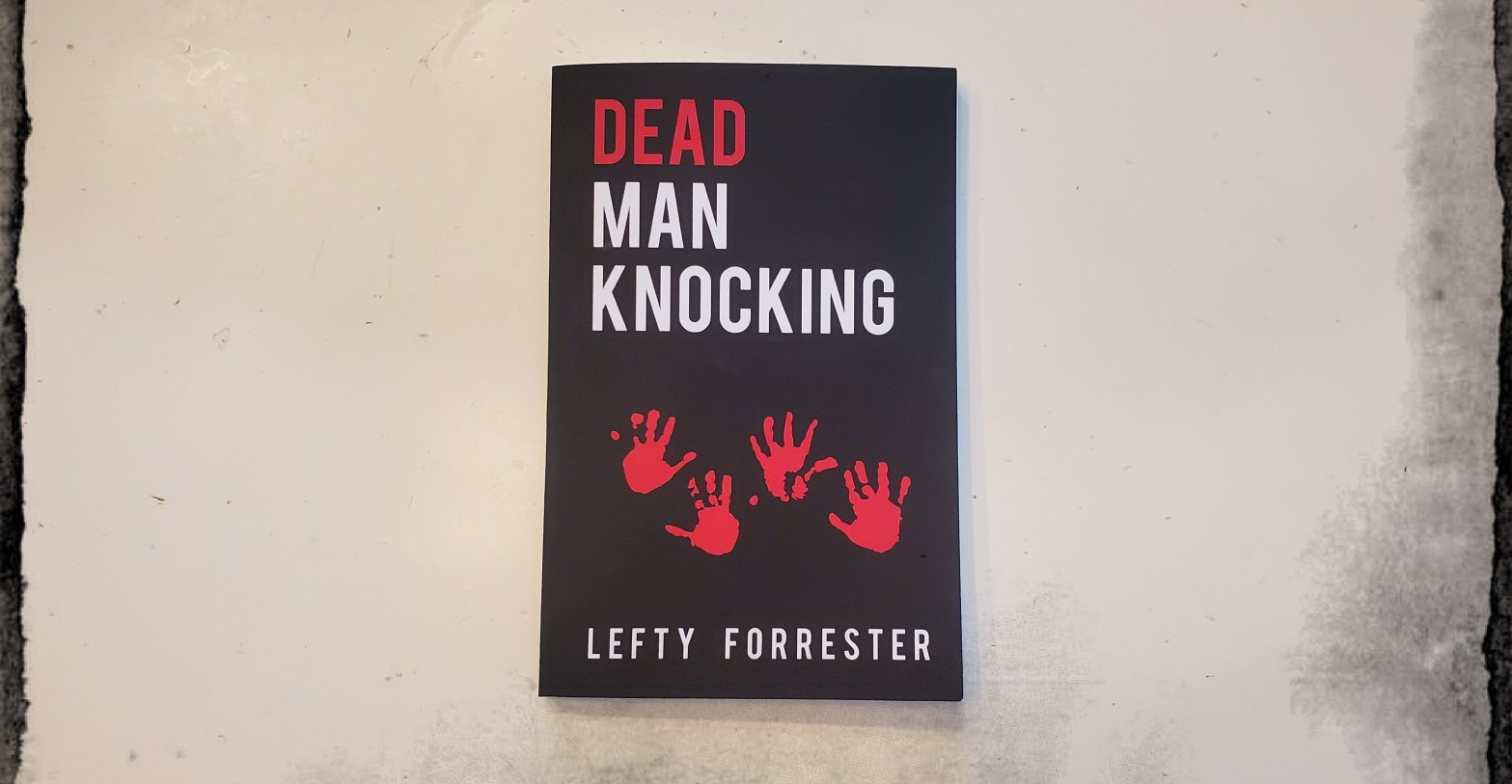
I am proud to announce that my first work of fiction is now complete and available for purchase! Hooray! It’s called Dead Man Knocking, which is a serious, serious title. It’s about death, and men, and knocking on things. Serious, serious stuff. No, it’s about a skeleton who tries to write knock-knock jokes. No! It’s seriously seriously about a young man coming to terms with his place in our modern world with its changing climate. Kinda like what we’re all doing right now.

I worked hard on this one, sitting at my typewriter going clickity-clackity-click. I shuffled through my papers, flipping through them, re-reading them, making notes and crossing things out, all while sipping a glass of whiskey like some weird Hemingway-wannabe. Of course, as is the case with everyone in our society, I am a slave to computers. So I took my papers and typed away with a softer version of the clickity-clackity-click. And I continued to edit, and now it is complete.

Quite a few people purchased my last book, which was a collection of “lessons” [check it out on my page], and I greatly appreciate that. It made me feel good, it boosted my confidence, and it helped financially. I mean, every bit helps, and I am trying to save some money for an abroad program that I will be doing. So, for all those reasons, thank you very much. And I would be even more appreciative if you found it in your beautiful heart to purchase this first novel of mine.

Now, you’ll see that the book has a very simple cover. It’s got the name of the book on it,  it’s got my name on it, and it has some red hands on it. That’s pretty ominous, isn’t it? Those hands probably represent something, don’t they? I’m curious about that. And on the back there is some sort of attempt at humor. But we all learned and believe that you should not judge a book by its cover. So stop doing that! I need to stop doing it too! Judge a book by, I don’t know, the power of its words, or something. 

Anyway, I think you’d like the book, and I think you should buy it, and read it. How does that sound? Pretty good, I’d say. Maybe you got an Amazon gift card for Christmas from your crazy uncle. That uncle that lives somewhere in the middle of rural Oregon, that you haven’t seen in a long time, but he still sends you a birthday card and a Christmas gift every year, but he doesn’t really know you, so he just sends money and gift cards. That uncle? 

So you might be thinking, “Gee, I sure do appreciate this Amazon gift card, but what should I buy with it?” Maybe you should support an up-and-coming author as he begins his meteoric rise. That sounds like an interesting plan. Do that. Thank you.

Oh yeah, you can find it here: https://www.amazon.com/Dead-Knocking-Lorcan-Lefty-Forrester/dp/B09K1TXHQ6/ref=sr_1_1?crid=1HBPXKIX3A1Q5&keywords=lefty+forrester&qid=1640983769&sprefix=lefty+forreste%2Caps%2C167&sr=8-1

Motivation

I recently attempted to complete a writing challenge called NaNoWriMo, which stands for the National Novel Writing Month. Essentially, it is a challenge to write a 50,000 word novel in the month of November. I did not complete my novel in time, but I am very proud of the incredible progress I made, especially considering the fact that I’m a full-time college student and I work 30 hours per week at my job. And I’m gonna continue it and finish it.

November was one of the most motivated months I’ve had in a long time. I was writing a lot, reading a lot, doing well in my classes, working my job, exercising a lot, eating pretty well, and I didn’t drink until the last day of the month. So it got me thinking about the concept of motivation, what it is, what it isn’t, how it feels, and so on.

Sometimes I feel a feeling of motivation, and sometimes I don’t. Some days I wake up and I’m just like, “Yeah! Let’s do it! Let’s do some stuff! I’m motivated!” and it honestly can feel very euphoric. I feel like a hero. Especially when it’s that super-motivation feeling in a creative sense. When I’m motivated to write, and the writing is flowing freely, and it’s good [hopefully], and I’m getting a lot done, that is one of the best feelings in the world. I start thinking, “Yeah! This is amazing! This is why I’m here on this planet!”

Bit of a cheesy thing to think, but you are what you eat. Anyway, motivation is kinda like… happiness, or something. You can’t really force it to happen. There’s no magic formula to produce it. Sometimes you just don’t have it. Like two weeks ago, I was planning on writing this essay on Christmas movies. I had some interesting thoughts, some funny jokes, some social commentary. It was gonna be great. But it was getting close to Christmas. So on the 23rd I was like “All right, I’m gonna go to work, get through the day, drink coffee so that I have enough energy. Then I’ll write that essay when I get home.” 

Then I got home, and I started writing about how, in the old Rudolph movie, Rudolph goes through puberty, and when he reunites with the reindeer who bullied him, they all have New York accents for some reason. That’s kind of interesting, but after I wrote a little bit, I just felt no motivation. I did some pushups. That helps sometimes, but not this time. There’s no magic formula. It was just done. So I closed my computer. Bit sad, innit?

And yeah, sure, there are things you can do to make the feeling of motivation more frequent and more likely. Sure. For example, if you drink a lot of alcohol, you probably won’t have a strong sense of motivation the next day. And living a healthy lifestyle in general will, generally, lead to more motivation, generally speaking, of course. That’s how it was for me in November. I was exercising a lot, eating pretty well, I wasn’t drinking, I was going to sleep early and waking up at the same time, that type of thing. But here’s the problem: those things also require motivation! That lifestyle may produce some motivation for writing, but it also requires motivation to exercise every day. It’s fucked! 

So inevitably there comes a day when you can’t summon the energy to do those things, those things that are sustaining your motivation. You just can’t do it one day. That’s all right, you take a break. You try to recapture the motivation the next day. There’s some, but not as much as before. And then, well, it snowballs. It can snowball, until you’re an unmotivated blob, eating Chex Mix and replaying Super Mario 64 for the hundredth time. That’s what I do anyway. Sometimes, tragically, I seem to reach a low point of despair before I’m jolted back into a motivation-fueled period. Bit tough, innit?

So that’s the day-to-day motivation. But what about the general motivation of one’s life? What motivates me the most in life? That’s a huge fuckin question, and one that people may grapple with throughout their entire lives. I know I do, from time to time. Is it money? Love? Fame? Literary excellence? Something as indescribable as success? The approval of certain people? What motivates me? A combination of things. The mind is a complex thing, and it has a convoluted set of wrinkles and billions of neurons which shoot certain messages here and there. I’m not too sure. 

I think about it often. What motivates people? Different things, probably. They’ve all got their own billions of neurons firing their little electric signals about. Some people say, “Well, people everywhere and in every culture are just motivated by profit. Money. Greed is everything in human nature. That is the motivation.” I find that very interesting. I disagree, of course. I think we can look at people and see that they are trying to make more money, they want more money, they’re happy to make more money. One person can see that and say “people are motivated by greed.” Meanwhile I can see those same people and say “people are motivated by a desire to improve their lives, and the society is designed such that the best way to improve your life is through money.” 

Martin Shkreli certainly is motivated by profit, by money, by greed. He’s a lot more motivated by that than, say, Jonas Salk. Of course, Salk needed money to live, as we all do. 

I find this reduction of human behavior to greed quite peculiar. I’ve heard it my whole life, and I’ve believed it at times. I don’t now. I find it especially interesting when discussing an idea such as Universal Basic Income [UBI]. Sometimes the same people who say that people are fundamentally, completely motivated by maximizing their own wealth, will also say that, if we give people enough to live, they’ll simply collapse and do nothing for the rest of their lives. If greed was such a fundamental motivating factor of human nature, why would it disappear once basic needs are met? Bit strange, innit?

That’s somewhat strawman-ish, and there are some other potential problems with UBI, but I have had conversations similar to that. The truth is that human motivation is complex, varied, and heavily influenced by social systems. 

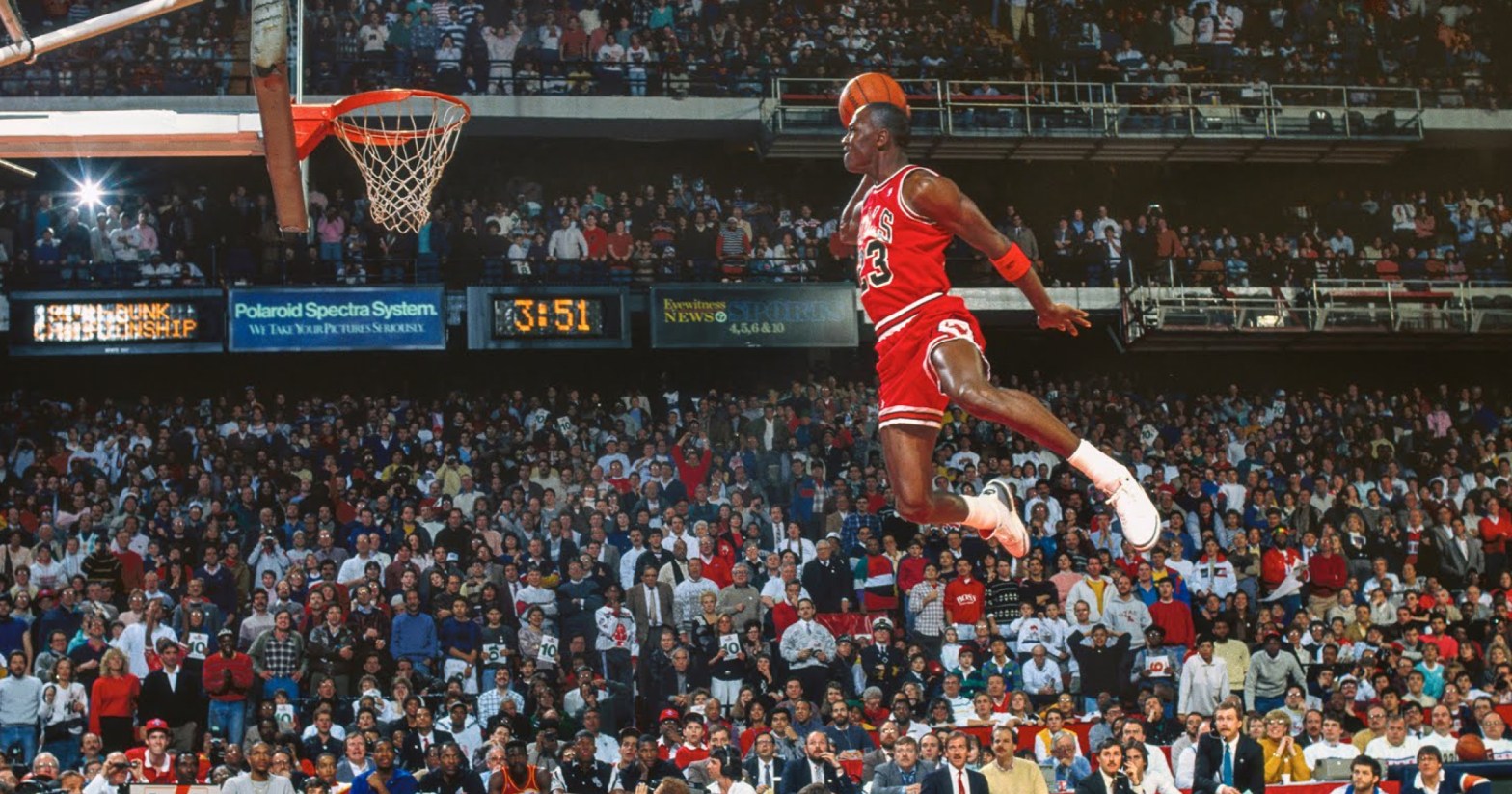
Oh! And this month tends to be one with a lot of motivation. It’s a new-year new-me, clean slate, fresh start type of thing. Can be a bit silly, but I do it too sometimes. I get motivated in January. It’s kinda fun. Sometimes you gotta try to manufacture motivation. Michael Jordan, one of the most motivated guys that I know of, used to manufacture motivation out of anything. Any little comment, or gesture, or someone saying ‘Hi’ at a restaurant,’ or someone not saying ‘Hi’ at a restaurant, or someone saying he gambles too much, or a different player winning an award, or getting sick, he just used any and everything to motivate himself. Pretty incredible. And I often get motivated when I watch Michael Jordan videos. So I’ve watched The Last Dance quite a few times. It tends to get me motivated. Not that I want to be “like Mike,” but his passion and drive for the game of basketball are inspirational for my own passions in life.

Gotta Buy ‘Em All! Collectibles, Consumerism, and Christmas [more like ChristMAS (cause mas means more in Spanish)]

On Christmas of 1998, I opened my gifts: a lime green GameBoy Color and the accompanying game, Pokemon Red Version. It was the first video game I ever owned, and I was filled with joy, starting my Pokemon journey with Charmander on that wonderful day. Pokemon in the late 1990s and early 2000s was an international craze, and I was part of it. There were movies, shows, games, spin-off games, toys, cards, posters, and so on.

Twenty-three years later, I am working at a store at Christmastime, and we sell Pokemon cards, and some packs come with a toy. It might not be as much of a craze as it was in the late 90s, but Pokemon fever [that’s a corny term, sorry] is still here. We’ve had people waiting in lines outside of the store before we open, just to come in and buy the latest 25th anniversary celebration pack with the Mega Pikachu figure. We’ve had to limit the items to one per customer, and some of the customers let me know how they were at Walmart when they opened, Target when they opened, and now buying another pack from me when we opened. I’ve heard stories of people re-selling some of these packs online at 400% the original price. I’ve even heard stories of people following the delivery truck that brings the cards to these stores, following the guy as he leaves the store, trying to get more packs.

This holiday season has me thinking about collectibles, consumerism, and Christmas. 

When I was a kid, I mostly liked Pokemon because Charizard and some of the other Pokemon looked cool. Looking back now, I see that the entire world of Pokemon was explicitly founded on the concept of collection. It started with 151 Pokemon, and the slogan was “Gotta Catch ‘Em All!” Just think about that phrase for a second. It’s close to saying “You must collect everything.” Collect. That is the purpose. The point of Pokemon is to collect. In the very first game, Professor Oak tells you to collect all the Pokemon. 

And what’s ironic about this emphasis on collection is that Game Freak designed the game such that it was actually impossible to catch ‘em all. In order to complete your collection, you had to have access to another GameBoy, the opposite version of the game, and a link cable. “Gotta Catch ‘Em All!” except you can’t unless you buy extra shit. It was, of course, deliberate, in order to sell two copies of the same game, essentially.

Pokemon has been profiting off the concept of collectibles since its inception, and it is a never-ending phenomenon that desperately tries to convince you to buy every single fucking thing they release. What makes something a “collectible” anyway? I mean, if the Pokemon company released a plastic figurine of Mewtwo and called it a collectible, does that make it so? That seems to be the case with the customers I’ve seen, desperate for the latest release of the 25th anniversary celebrations Pikachu collectible edition pack or whatever

And I’m not out here trying to say that you can’t enjoy Pokemon. You can. I like Pokemon. It’s a fun game. And you can buy stuff. I want to say: beware of the idea of collectibles and the idea that buying more of them will make you fulfilled. It doesn’t. And it really is manipulative. They can just slap the collectible label on things to coax your mind into this frenzied state. I gotta have it. I gotta have it. They’re just preying on that  idea. It never ends. 

The worst of this collectible phenomenon are those Funko Pops. Those things are the epitome of this shitty, useless, collectible culture. They are an insult to art itself! Those soulless figures are the bane of my existence! Not really, I’m just saying that for dramatic flair, but I do honestly think they represent this mass-produced phenomenon of just making products based on a character, you like the character, so buy the product! Buy product! 

I think this really does have much of its roots in the 1977 release of the film Star Wars. And I know people have been collecting things for a long time, I mean, take King Tut! The man collected a lot. But this modern capitalistic form of mass-produced collectibles as an extension of art and film and literature, that phenomenon, in my opinion, has a lot of its roots in the Star Wars franchise (in the U.S.A., at least).

Think about it! I mean, think about the most popular movies in American history before Star Wars. There’s Gone With the Wind, Casablanca, The Sound of Music, The Godfather, Jaws. And there were some fantasy or sci-fi-esque popular movies too like King Kong and The Wizard of Oz, and 2001: A Space Odyssey. What would happen with those movies? You’d go to a theatre, give them some money, watch the movie, then go home. That was it! You might talk about the movie with your friends, and see it again if you wanted. That all changed with Star Wars. The Star Wars toys, released by Kenner toy company, made so much fucking money that the toy profits were actually instrumental in funding the next two movies. Lucas went over budget and had to use his personal money from the toy sales to help fund The Empire Strikes Back.

People collected the toys, and it set a precedent. Not only did Star Wars set the tone for film franchises, it also set the template for the merchandising that surrounds the film. Blockbuster films are marketable for toys and other merchandise. Collectible stuff, as it relates to popular media.

I’m not really trying to shame you for enjoying things, but I just think that the extreme commodification of collectibles with mass media franchises (Pokemon, Star Wars, Harry Potter, Marvel) is a waste, it’s toxic, and it’s unnecessary to enjoy those franchises, or any franchise for that matter. Buying little collectible commodities is not a good approach to being fulfilled, in my opinion. And now we’ll get into my personal experience.

My grandfather was a hoarder in his life. Maybe not as bad as you see on these TV shows, but he was definitely a hoarder. When he died, it was sad, as it is when family members die. We, his family, went through his stuff. That’s what happens when you die, your family goes through your stuff. It took so, so, so long to go through his stuff. Don’t take that as me saying that it was worse than losing a loved one. It wasn’t. But we had to go through his stuff. And after going through mounds and mounds of junk, I have a hard time believing that any of these little trinkets made him happy.

There’s just so many little, useless, bullshit, collectible things that you can buy. And, uh, well, try to stop doing it. In my opinion, it is not a fulfilling way to live, and companies are just, you know, manipulating you [and me] into thinking of something as a collectible, to buy it.

I don’t really like critiquing “consumerism” because I think it detracts from stronger criticisms of capitalism, but hey, I’m just writing a fuckin blog posts about Pokemon, I’m sure we’ll all be fine. I’ll do better next time, how bout that? How does that sound?

Interesting…

In 1983, musician David Bowie was interviewed by MTV host Mark Goodman. This was during a time when MTV played music videos, and Bowie pressed Goodman on the fact that MTV did not showcase black musical artists. And even when they do, they’re on at 2AM. Goodman responds by saying, well, we can’t just be concerned with what’s popular in New York and L.A. We also have to consider some kid in the Midwest who “would be scared to death by Prince, which we’re playing, or a string of other black faces.” And Bowie simply responded, “Very interesting…”

It’s such a powerful exchange, and of course the “interesting” is not interesting in the pure sense. It was not interesting in the same way that a botanist finds a plant interesting. It was “interesting…” And the inflection, the tone, the pause, the way the word lingers in the air, it gives the word an extra quality that I just love so much. Bowie literally said “Very interesting…” but he was essentially saying, well, that’s fucking shitty and racist. Goodman justified the idea that it’s reasonable to get scared at seeing a black person on television.

Anyway, the conversation continued and Goodman said that MTV can only promote inclusivity and diversity slowly, just a bit at a time, so as not to offend some racist viewer in the Midwest or something [sorry, Midwest people, it was just Mark Goodman’s example]. And Bowie again responded with “interesting, thank you very much.” 

It was a great interview, and likely influenced MTV to showcase more black musical artists, eventually. It got me thinking about the word “interesting,” and how, well, interesting it is. As I said, interesting doesn’t always mean strictly interesting. Another classic example occurs in discussions between men and women in relationships. A man will ask “Are you mad?” or “Is something wrong?” and a woman will respond, “No. I just find it interesting that…” In this case, generally speaking, interesting does not only mean interesting. Whatever she’s about to talk about, she’s not just interested in it in the way that a physicist finds particles interesting. She’s interested in it in a personal way, which makes her feel something. Like how I “find it interesting” that my boss gave me more responsibilities without raising my wages. Hmm… that’s interesting…

Have you ever asked someone if they liked something, like a movie or a meal at a restaurant? And they say, “It was… interesting…” When they say that, you know it was not good. If a movie or a meal was good, the first word you would use to describe it would never be “interesting.”

But then I started thinking about the word “interesting” in a literal sense. There’s so much in existence that I find interesting! I’m interested in writing, classic literature, environmental science, physics, metaphysics, philosophy, politics, whiskey, playing the guitar, playing the piano, basketball, American history, the history of cults. I’m interested in words, thoughts, life, death, love, and so on and so on. And I’m not trying to say that I’m somehow unique for having varied interests. I’m not. There are plenty of people who are interested in a ton of different things at once.

BUT, there are people who are interested in one thing, or just a couple things, or it’s obvious that they hold one interest to be their Supreme Interest. For example, Luciano Pavarotti probably had a few interests, but it’s fairly obvious that his Supreme Interest was singing opera. I feel like I’ve spent much of my life without a true Supreme Interest. I also feel like the very varied interesting interests have been an overall negative aspect of my life, but maybe I’m just a silly pessimist.

Because I haven’t had a true Supreme Interest, I tend to bounce around all over the place or I stretch myself out way too thin. I did some serious soul searching a year and a half ago, and I decided that the “being interested in everything” lifestyle wasn’t really working. It left me feeling unfulfilled. So I made a compromise with myself. I now {[(kind of)]} have two main interests in my life that I am pursuing above all the rest. So I’ve had to sacrifice time for some of the other things that I’m interested in, and life is about sacrifice and all that stuff.

Of course, I’m still a mortal man! And I still find myself bouncing all over the place from time to time, stretching myself to the point where I’m not really doing anything. And I have to reel myself in and re-focus. 

There’s another thing about finding so many things to be interesting: I never seem to find myself ever feeling bored. I can’t even really remember the last time I felt bored. I don’t understand what it’s like to be bored frequently. Sure, I can understand, to some extent, a person who gets bored from time to time. Let’s say, if you’re standing in a line for a concert for a long time or something, you might get bored. I can understand that, though I don’t feel bored myself. But the people who talk about being bored all the time… I don’t quite understand what it is they’re doing. Just think!

A problem arises from my never-bored lifestyle. I find it very difficult, and maybe impossible, to relax.

Hang on, I thought this post was all about the word “interesting,” so let’s get back to that. Actually, the rest of my thoughts on the subject aren’t all that interesting…

Creative Block

Writer’s block, musician’s block, Lego creator’s.. block [funny?]. Whatever creative thing you’re into, there’s a block for that. Blocks galore! Whatever medium in which you create, you will be blocked! There’s no stopping it. So what the fuck do we do about it?

I’m currently writing a novel, and I’m not even experiencing writer’s block right now. I finished my first draft, and the second draft is going a bit more slowly than I had anticipated, but I’m doing well. I’m not experiencing the dreaded block right now. Yet here I am, writing about the unstoppable block. 

Oh boy, how doth that writer’s block ache my futile brain. Here’s what happens: you’ve got some energy, maybe by way of caffeine or other chemicals. You’ve got your medium: your guitar, your typewriter, your computer, whatever it is. You’ve got some time: it’s the weekend or your day off, or you finished your schoolwork and chores, or whatever. You’re all ready to go express yourself in your creative passion and.. nothing. The prevailing feeling is one of being stuck. It’s like running in a dream, you really want to do it, but you just can’t seem to get anywhere. 

What does one do when one is stuck? I can only tell you about my own experience. I’m only human after all! I don’t know everything! So my creative passion is writing, so I write, and I get writer’s block. The writer’s block demon comes in and clouds my mind, preventing words from forming. And I say, “Die, monster! You don’t belong in this world!”

Anyway, what typically happens is that I sit down to work on my big project, my book, and I get stuck. I will struggle against the block for a bit, to see if I can get through it, but soon enough I have to admit that I’ve got writer’s block. What I’ve found is that writer’s block is sometimes specific. So I try to write something, anything else. There are plenty of google docs that I have with very basic ideas for essays or rants or opinion pieces or short stories or whatever. I scroll through those and see if one of those piques my interest. If I’m lucky, I’ll open one and get to work, and it’ll flow easily. Then at least I’ll be writing something.

But alas, sometimes that does not work. Damn! Foiled again! But wait, I still have hope. If that strategy does not work, I move down the line. I will pull out a piece of paper or cute stationery and think about my friends, who I love dearly. I’ll take out a ballpoint pen and write them a beautiful, endearing letter, talking about my life, asking about theirs, and cracking some jokes about this silly world.

Should that fail, I break out my spooky journal with all of my mind’s secret workings. There, now I can write about things I did, things that happened to me, and my emotions regarding all of that. Do I feel happy? Do I feel sad? What’s happening? Am I feeling healthy? Do I love anyone? And so on. This is the final safety net, as it were. If I open my journal, and I still can’t find anything to write, then there is nothing left to do but admit defeat. 

Maybe, if you’re a musician, an analogous series of steps would be: sitting down to write a song, you can’t, try to work on another song you’ve been writing, you can’t, try to learn a new song, you can’t decide, practice a song you already know, you can’t, practice scales and other shit, and so on. Or something like that, I’m not a good guitar player.

All right, so I’ve been defeated by the writer’s block demon, so now I have to do something else, which is very scary. I like to go for a walk, or if I’ve got more time, go for a whole hike somewhere. That can be enjoyable, and often it leads to my brain churning, which might help me write the next time I choose to do so. A lot of the time, I’ll just read a book. Or I’ll do some of those annoying chores I gotta do like paying bills, which is disgusting. But then I can get it over with. Phew! It’s in the past now! But it’s affecting the present somehow, because now [the present] I have fewer moneys in my account so I can’t purchase things. How sad. Hey, that’s something I could write about in my journal.

What I used to do, once admitting defeat [I still do it sometimes, but not nearly as much], is smoke some weed, the olde wacky tobaccy. Sometimes that’ll just defeat the writer’s block demon then and there, cause I’ll just think of something hilarious or interesting to write about. If not, I’ll just go for that walk, high as a kite. But like I said, I don’t do that much of that any more. 

In general, that’s how I deal with writer’s block. I have a kind of flow chart of other things to write, so at least I’m writing something. If, one by one, they are all felled by the demon, I have to just admit defeat and do something else, and I usually have a few go-to things for that. 

How was that for a conclusion paragraph? Restating the main points, my teachers would be so proud.

P.S. Oh! By the way, I used to have this idea, like 7 years ago that I just remembered. Wouldn’t it be funny if there was some kind of rectangular prism, where all sides were some kind of whiteboard surface thing, where you can write and erase easily, and we’d call it the “Writer’s Block”? It would be a block.. for writing. I think I had the idea more fleshed out when I was young and full of life.

A Solution in Search of a Problem

There’s a video gaming Youtube channel that I used to watch a lot called “Happy Console Gamer,” which features a Canadian guy talking about video games. He talked mostly about RPGs [which I don’t play too much] and retro games [which I do play a lot]. On one of the videos, he brought his friend on to talk about video games. They grew up friends and were still friends, and they talked about their memories and experiences playing various games in The Legend of Zelda franchise.

It’s a great fantasy and action/adventure franchise with some of the most beloved games of all time. In Zelda, you play as Link and you use a sword and a bow and arrow and other items to defeat enemies, solve puzzles, save people, explore dungeons, and defeat evil. One installment, called Skyward Sword, featured the Nintendo Wii’s motion control. Instead of pressing a button to make Link swing his sword, the player had to wave the Wii controller around to simulate a slashing motion. Happy Console Gamer’s friend called this, “A solution in search of a problem.” I just love that phrase. I love it enough to write this blog post about it.

There was no problem with using a button to slash the sword, yet Nintendo thought they were solving a problem which didn’t really exist. A solution in search of a problem. In fact, future installments in the franchise [such as Breath of the Wild] don’t utilize motion controls for almost the entirety of the game [not all of it, though]. And that game is vastly more beloved and more acclaimed than Skyward Sword.

But here’s the thing: Skyward Sword is just one example. So I have a Nintendo Wii, and I use it to play GameCube games 90% of the time. And if you have a modern video game console, you know that when you turn it on, there’s a menu, and you can either pick a game or go to the game shop or whatever. The Wii forces you to use the Wii remote to navigate the menu. Why?! There’s no fuckin reason I shouldn’t be able to also use the GameCube controller for the menu. It’s such a solution in search of a problem. There was no problem with using a regular controller to move around the menu. I can use the controller for other stuff! Like, you know, the games!! Just let me use the controller, man. I’ve literally had to go out and buy batteries specifically to use the Wii menu. What the fuck?

But I don’t only wanna talk about the Nintendo Wii, though there are other examples. This is a phenomenon [IDK if I’m using that word correctly] that happens with technology all the time.

Take Instagram, for example. Initially, it was just photos. It was a great, fun app. Then they allowed short videos. That was great. That was a legitimate improvement, as it allowed more variety of posts. After that, they added some bullshit called “Reels,” which were just.. short videos again. And they acted like it was this amazing fucking innovation. I’m sure there’s some minor technical difference, but essentially they are short videos, the same thing we had. A “solution” in search of a problem.

Here’s another thing: my phone has a physical volume button on the side. Click the top and volume goes up, click the bottom and volume goes down. There are two types of volume: one is basically the “ringtone” volume, which is also the volume for text notifications and stuff. The other type is media volume, for YouTube, Netflix, whatever. When I’m on the Instagram explore page, I see a video of a guy playing a guitar, so I click on it. Naturally, I click on the up volume button so I can hear the video. What does it do? It changes not the media volume, but the ringtone volume! Tell me, why the fuck would I want to adjust my ringtone volume when a fucking video is playing?? Let’s fix that problem next.

But yeah, technology in general seems to create solutions in search of problems all the time. Like an app will update and change where the comment section is. Wow, you really solved that problem of the comment section being somewhere else. So incredible! Or they’ll change the way the search icon looks, or the exit button or whatever. Wow, such innovation!

Apple would do this shit all the time in the mid-2000s. They would release a sick looking commercial introducing a stupid feature, and everyone would go crazy about it, but it didn’t even make anything better. You can skip songs by shaking your iPod!! A feature no one fucking needed!!

Anyway, I could go on and on, and I know I’m coming across as an angry, anti-technology guy and I kind of am. I wanna live in a small house in some far-off place with no computerized stuff whatsoever someday. BUT I understand that technology does have many positive purposes, like me sharing my thoughts with the whole world here. I just think that a lot of the “progress” of computers can be summed up as solutions in search of problems.

Ways of Thinking that I Don’t Understand

I’m sure my brain does some thinking at times that doesn’t make sense to others. Or, at the very least, my way of thinking differs strongly with someone else. For example, I am always early to everything all the time. I get stressed when I feel like I am going to be late. It’s something I’ve inherited from my father, as nature and nurture continued their never-ending battle. There are other people, of course, who are chronically late, who don’t give a single shit about being early, and never stress about showing up on time. Our ways of thinking differ greatly, but at least I understand their mindset. Punctuality simply isn’t an important aspect of their life.

On the other hand, there are ways of thinking that I really don’t understand at all, and I’d like to discuss a couple of them. First is the notion that, “I had to suffer through something, so other people should suffer the same thing too.” It’s somewhat similar to the “misery loves company” idea, but there is a key difference. With misery loves company, I imagine someone suffering through something, and, if someone else is suffering a similar struggle, the shared struggle creates a sense that someone else has to do this too, and maybe you can get through it together. But what I’m talking about is someone who has already suffered through a hardship, got through it, and when presented with an idea that will prevent others from enduring similar hardships, they are against it. It is not a concurrent misery. It is misery that occurred, then a possible solution to that misery, then a resistance to the solution based on a person’s already having experienced the misery.

The most obvious example of this way of thinking is in regards to student loan debt and the cost of college in general in the United States. There are some, including me, who advocate for alleviating the colossal student loan debt that is plaguing this nation. This would involve some sort of debt cancellation. There are some, including me, who also advocate for the reduction of tuition costs so that we won’t just return to the debt crisis again. When these types of suggestions are made, there are always people who have already suffered through their large amount of student debt, paid it off, who resist the change simply because they already went through the suffering that we’re trying to alleviate. “I already paid my incredibly inflated student loan debt, why shouldn’t everybody else?”

It is this line of thinking that I have great difficulty understanding. “I went through X, and you’re trying to make it so no one has to go through X in the future, but I already went through X, so I want everyone else to go through X.” What the fuck? I understand, to a small extent, the frustration they must feel. As time progresses, things change, and sometimes things change in a way to make things easier for people. And there may be some frustration that, when you were younger, it was more difficult.

Take elevators, for another example. A person may have grown up in a world without elevators, and they may have lived in a building with flights of stairs that annoyed them and tired them out. After years of climbing stairs, climbing stairs, climbing stairs, someone comes along and invents an elevator. And the person might be frustrated that they spent all those years climbing stairs and they missed out on the luxury of elevators for most of their life. I can understand their frustration, but I wouldn’t understand their notion to ban elevators because they had to climb stairs every day of their life.

It’s just a way of thinking that I don’t understand. I have had to struggle with a tremendous amount of student loan debt, and I’ve hated it. It has been horrible. But if we can end that system, and make it easier for people to access higher education without such an extreme burden, I hope that we do. I want the people that come after me to live in a better world. Why wouldn’t people want that, in general? Now, some people may disagree with the specific example of student loan cancellation or cheaper/free public colleges for some other reason. Whatever. But to specifically cite your own suffering through it as justification for why it should not improve, that makes no fucking sense.

When I was even younger, Google and Wikipedia were very new and not nearly as widely used or effective. But now they are, and kids who grow up with them have better access to a wide range of knowledge. And that’s good! I want future generations to get better. I cannot understand people’s reluctance to the world getting better after them. Perhaps they are just bitter, miserable people.

The second way of thinking that I don’t understand is a bit less broad. It’s no secret that many important historical figures held shitty views, practiced shitty behavior, etc. There’s a wide range of beliefs and behavior here, so condensing it all down to “shitty” is obviously insufficient, but I don’t want to go into every historical figure here. At the very least, there is ongoing debate about how we should remember certain figures with the context of those beliefs and behaviors, and whether or not we should be celebrating them.

Of course there are degrees of shittiness and that is commonly brought up in these discussions. What I’ve often heard, however, is a way of thinking that I cannot understand. I might say something like, “We should not celebrate Person X because they held belief Y and practiced Z behavior.” And someone in the discussion responds, “Person X’s beliefs and behaviors were commonly held in the historical time. It was part of the generally accepted morality back then, so attacking them is unfair. We obviously know more morally than they did back then You should stop criticizing Person X from the morality of modern times, or else you’ll be criticized for something you’re doing by people 100 years from now.”

It doesn’t always go exactly like that, but very similar. I can kinda understand some of the first parts of their little diatribe. Morally contextualizing history is debatable, which is why we’re having the discussion in the first place. However, what I don’t understand is this notion that I shouldn’t criticize historical figures, who are dead, because it would be unfair and mean to them. And in the future, when I’m dead, someone might be unfair and mean to me. Who cares? They’re dead. And, in the future, I’ll be dead.

The second part of this line of thinking that I don’t understand is more interesting. There is a vague idea that moral standards generally progress throughout history. I can kinda get behind that idea, to some extent. So the idea is that, a person in the past may have been shitty by our standards, and we are probably shitty by the standards of people in the future. I can kinda get behind that idea too, to some extent. A common example is eating meat or using plastic. A person from 200 years in the future may look back at us and criticize us for eating meat [or factory farms, at least] and using so much plastic. I can agree with that too.

But it’s the next step in their way of thinking that I don’t understand. Instead of taking their realization [that future people will look back at the present and criticize our beliefs and practices as antiquated and bad] and using the realization to adjust their beliefs and practices, they instead decide to stop criticizing people from the past, lest they be criticized also. Why?

I simply don’t understand that connection of thoughts. “Hey, we criticize people from the past based on our understanding of the world and morality, but they thought it was normal at the time. We probably do things that similarly seem normal right now, but will seem horrible by future people. Therefore, I will stop criticizing people from the past because I’m scared of being criticized after I’m dead.” What the fuck? That’s an important realization, and why wouldn’t you at least try to think about what we’re doing that’s shitty and change it? At least try. I don’t understand this way of thinking, and I’ve never really asked someone to explain it further because I believe it would have to entail a much deeper conservation about what the point of human life is.

If anyone can try to explain these ways of thinking a bit better than I have, I’d be happy to hear it.

High Movie Review #13: Spider-Man

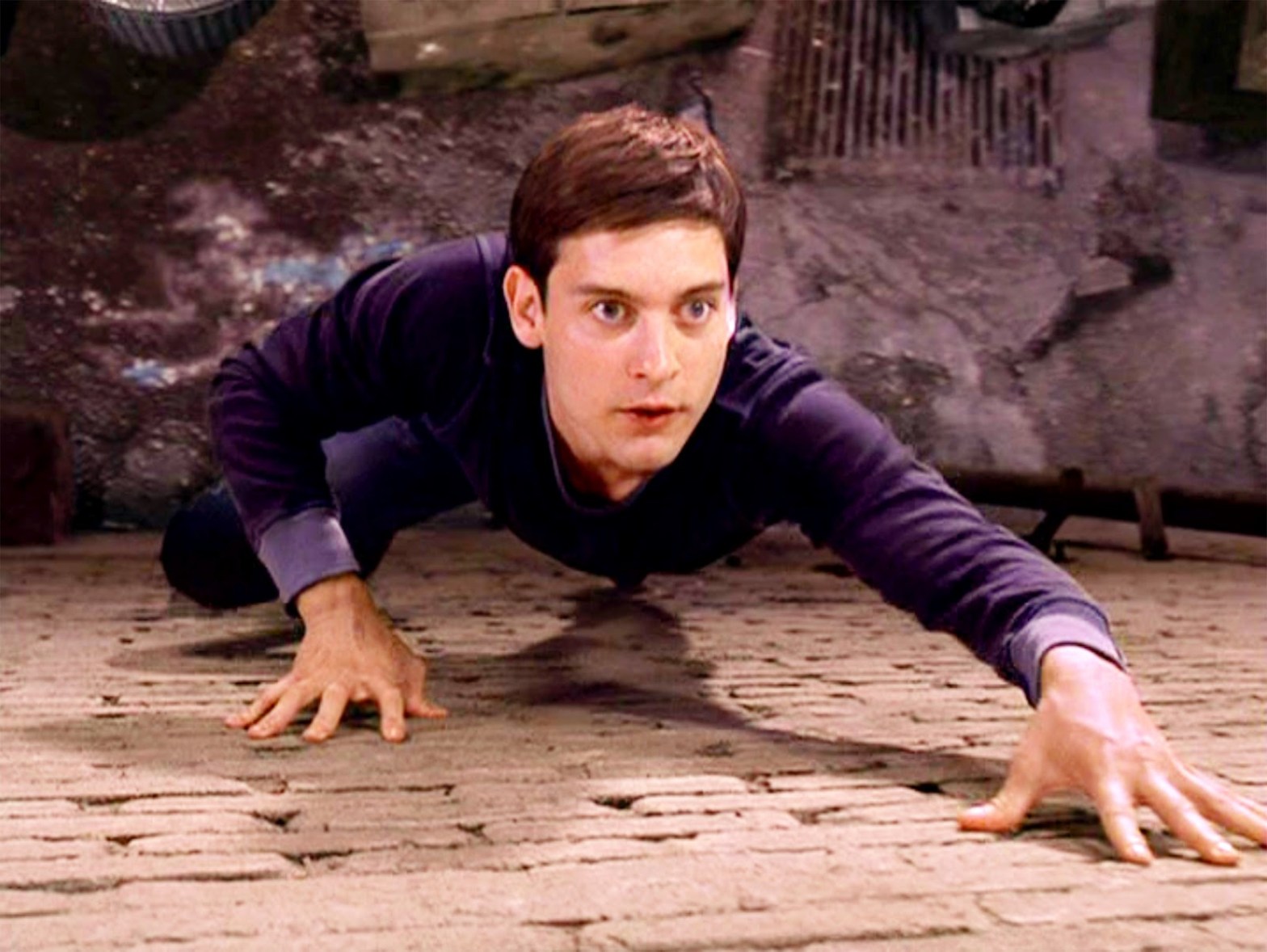
This was the first DVD I ever owned. I remember it. I received a gift card for Christmas, and I went out to the store, and I bought the original Spider-Man movie on DVD. I watched it over and over again, and I loved it. And I still have that DVD! And I’m watching it on my PS2 right now. I’ll admit that I love late 90’s and early 00’s technology. I’m nostalgic for it. I enjoy it, you know? People are free to enjoy whatever era of technology or fashion or art or music or whatever that they want. Just don’t be an asshole about it, okay? I try not to be. I enjoy a lotta early 00’s stuff, and I let everyone enjoy early 2020’s stuff as they want. It’s all good.

Anyway, this movie, and the whole trilogy, in some ways, it kicked off what we have now which is superhero movies as the main movies in the world. And I know there were some Batman movies in the 90s, but they were a mixed bag; some were all right and others were complete shit. And there was Superman which was kinda good, but it’s such a different era and didn’t lead into the superhero genre as a whole as much. But the Spider-Man trilogy opened the door for the superhero era. It was amazing, and it passed the baton right to The Dark Knight and the MCU. Some decry the so-called “superhero era” of movies, asserting that superhero movies tend to lack depth [which is true for most, but not all], and that the genre’s dominance squeezes out other potentially great works. And others love superhero movies. And I’m a bit of both. I do see how this era can stifle other projects that don’t fit the formula, but I do enjoy Spider-Man movies. And just because a film is not extremely popular doesn’t mean you can’t enjoy it and that it isn’t great. 

ALSO, this movie and its trilogy came out right smack dab in the era dominated by franchises of various kinds. Spider-Man, the Star Wars prequels, Harry Potter, the Lord of the Rings, the Matrix, and Shrek all came out at around the same time. Incredible.

Who cares about all that, what do I think about the movie? I love it. I’m getting older, as people do, but I [like millions of people] related to Peter Parker, even though I was younger than him when I watched this movie initially. I actually looked fairly similar to him, though I didn’t wear glasses, I liked science [I’m not a genius, but I like it], I wasn’t rich, and I used to be not so smooth with girls. He’s just a very relatable character. Tobey Maguire plays the nerd well. 

Willem Dafoe plays a truly terrifying Green Goblin/Norman Osborn. I was legitimately scared as a kid. “You know how much I SACRIFICED?!??!!” Fuckin’ scary. When he attacks Aunt May, also fuckin’ scary. And who could forget Norman’s hallucinations. Incredible performance by Dafoe.

One of the best casting decisions in the history of superhero movies was J.K. Simmons as J. Jonah Jameson. That character is so funny. He used to piss me off when I was a kid cause he was always giving Peter a hard time, but as I got older I realized how funny he was. 

The rest of the cast is good too. Kirsten Dunst plays a good girl-next-door type. I don’t love her character, but she’s perfectly fine. A good Mary Jane Watson. 

So Peter gets bitten by a spider and he develops super spider-like powers. Everyone knows that. And the scenes of him steadily finding out about his powers are fun. It kind of starts off slow and then builds from there. His powers are so cool too. Swinging around New York sounds so fun. Oh yeah, it’s hilarious when he’s trying to shoot the web on purpose for the first time. “Go web, go! Fly..” I used to imitate that scene so much as a kid. That was kind of the earlier form of humor that is so incredibly prevalent in blockbuster/superhero movies. Where you build up a scene with dramatic music and framing, and there’s an expectation that something cool is about to happen, only for something lame to happen. Hilarious. But it was actually funny in this movie.

It’s a coming-of-age movie in many ways. It’s that tough time, the end of high school. People have hopes and dreams and aspirations, and maybe no specific dreams, but there’s all this potential. And it’s hard to make choices, you know? I remember making a few choices around that time, thinking “Ehh, whatever, gotta do something,” but those choices had GIANT effects on my life. It’s insane, really. Uncle Ben even explains it. “These are the years when a man changes into the man he’s gonna become for the rest of his life. Be careful who you change into.” I think you can still change as you go on, but it’s true to some extent for some people. I don’t think you just become a certain way forever, but those years are still incredibly impactful.

Non-seriously though, Spider-Man’s first costume in the movie was hilarious. “The Human Spider? Ahh, that sucks!” They never showed how he eventually made the good costume, but whatever. Also it’s weird that Osborn’s assistant was murdered in Osborn’s lab and they just.. didn’t investigate him? Or interrogate him? His fingerprints are all over the place, including his neck! Oh well, I missed the part where that’s my problem.

Uncle Ben gives the main line of the movie: “With great power comes great responsibility.” I wish it were taken more seriously, but that’s a topic for another day. But throughout the trilogy it’s important to Peter’s growth as a person. I love how Peter goes from beating up a high schooler to fighting a professional fighter. The guts! Then he gets fucked over for the money by the business.. guy, who immediately gets robbed. Peter lets the robber steal the money, and in a cruel irony, the robber kills Uncle Ben. In his first real Spider-Man moment, he tracks down the robber and kills him. Or rather, he trips and dies, after Spider-Man disarms him. 

After Peter’s and Harry’s and Mary Jane’s graduation, there is a fun montage of the friendly neighborhood Spider-Man helping people, stopping robbers and whatnot. And they show a bunch of New Yorkers talking about him, and it’s exactly as I’d imagine it. That one guy: “He stinks! And I don’t like him!” And of course those women who want to fuck him, of course that would happen.

Anyway, there’s some double jealousy happening in the already convoluted love triangle. Harry is jealous of Peter because Harry’s dad loves Peter for his science brain. Of course Peter is jealous of Harry because Harry is going out with Mary Jane. Now that’s some serious tension. 

Osborn gets kicked out of his own company by “the board.” Now that I think about it, he really is a fuckin’ villain. He’s a dangerous capitalist and war-profiteering, making his fortune from the imperialist U.S. military, though the film doesn’t paint that aspect of his character as villainous. They have the MACY’s Thanksgiving Day parade with MACY Gray singing. And that song, Nutmeg Phantasy is a BANGER. Such a good song. Go and listen to it right now.

Hahahaha, oh my gosh. It’s so funny, I forgot. Harry and MJ are hanging out on some fancy balcony for rich people, and Harry tries to kiss her but she rejects it. Then Harry looks down and sees Peter down on the ground just STARING up at them. There’s this huge crowd of people mingling and whatnot, and Peter is just staring up at them, and he doesn’t even try to hide it or move away or anything. It’s such a non-subtle, hilarious image. I love it.

And then.. the Goblin shows up. It reminds me of another green villain, the wicked witch of the west. They both fly across the sky ominously, spewing dark smoke behind them. She spells out “Surrender Dorothy,” and now I’m imagining Goblin spelling out, “I’m gonna fucking kill those board members for selling my company.” Too bad he doesn’t say that, he just throws pumpkin bombs, which are cool, and one of them turns his enemies into skeletons, thereby killing them. Then Spider-Man shows up and this girl points and says, “It’s Spider-Man!” in the goofiest tone imaginable. And I thought it was cheesy even when I was a little kid. The line “It’s Spider-Man!” could be decent, but it was so cheesy. That was seriously the best take? I’d hate to see what the outtakes were like.

Anyway, Spidey meets the Goblin and they have a pretty cool fight scene, and then Spider-Man saves Mary Jane. And hey, Goblin chokes Jameson and asks him who Spider-Man’s photographer is, and Jameson says he doesn’t know. That’s pretty cool. He’s kinda an asshole, but he sticks up for Peter. That’s kinda heroic in its own way. 

Whaddayaknow it, Spider-Man saves Mary Jane again, this time in the rain, and they share a cool upside-down kiss. It’s very iconic, and it was spoofed in Shrek 2, another incredible film. Probably the coolest action scene is the fight between Spider-Man and the Green Goblin in the burning building. First of all, horrifying, when the Goblin turns around and screams. I love that line “It’s you who’s out, Gobby.” Spider-Man jumping around, dodging Goblin’s flying knife.. things, that’s the shit we all like about Spider-Man. We love the acrobatics and the powers. It’s just fun. I don’t mind if they make fifty more Spider-Man movies, I’ll be in there having a good time.

Also Willem Dafoe’s voice is so good! When he’s sorta talking to the Goblin, so to speak. It’s very creepy. “The cunning warrior attacks neither body nor mind. The heart, Osborn! First, we attack his heart!” Such a great line. You know, it’s funny, with all these superhero movies, there are so many actors who play comic book characters and then act with each other in other movies. Like, in American Psycho, the Green Goblin interviews Batman about the disappearance of the Joker. And in Zodiac, Iron Man, the Hulk and Mysterio are hunting a serial killer.

Anyway, Goblin figures out who Spider-Man is, so he kidnaps Mary Jane Watson and presents Spider-Man with a trolley problem. Save the girl you love, or the many innocent children. And philosophy students will continue to debate the question for.. ever, probably. Of course, in the original trolley problem, Spider-Man is never considered as a possible solution. A bit clumsy of those philosophy people, innit?

The fight at the end is pretty good too, and Spider-Man kinda gets his ass kicked for much of it. But once Goblin threatens to kill MJ, that’s when Spider-Man starts kicking ass. In the end, Osborn is killed by his own blade on his own glider. His last wishes were that Peter not tell Harry about what a monster he had become. Guilt, his final emotion. 

Okay, so a great movie with exciting action and a pretty good narrative, lots of tension between the main characters. Good main characters and good side characters. The PERFECT side character in J. Jonah Jameson. There was a Weird Al song about this movie that I used to listen to when I was a kid. It was a spoof of the song “Piano Man,” by Billy Joel. It was hilarious. Describing Willem Dafoe as the Green Goblin, he sings, “He’s wearing that dumb Power Rangers mask, but he’s scarier without it on.”
Hating Myself

I think I’ve hated myself in two different ways. The first was the worst and the hardest, the longest-lasting. And the second was still hard but it was easier to deal with on some level. But also, the second form, coming after the first, probably still had some of the first form wrapped up in it. 

I’ll try to explain.

So if you think about the phrase “I hate myself,” a big part of that is the word “myself,” obviously. Now I can think about myself as who I am, basically my identity. And that’s a bunch of things that combine into myself. My height, my weight, my hair, my eyes, my skin, my appearance, my voice, my talent, my skills, my personality, etc. It’s all myself, and that’s who I hate. I hate who I am. And that’s very difficult because you have to just, kind of accept who you are. There are a lot of characteristics that you just.. are.

And a lot of that is unchangeable. And a lot of that is almost unchangeable. My height’s not gonna change, my background isn’t gonna change. My voice and appearance can’t really change all that much. My social status might change, but it is what it is right now. It’s hard to accept. I definitely super-hated myself several years ago and it was horrible. It was so hard to deal with. And it nearly led to me ending my life. I’m grateful now that I didn’t, and that is thanks in part to some incredible people I knew at the time. 

But just because I “made it out” of that time, that horrible time, doesn’t mean that that feeling of hating myself totally went away. It’s a long thing, and it’s maybe a lifetime of accepting yourself. “God grant me the serenity to accept the things I cannot change,” and so on.

Another way to think of myself is what I do. And I know some people think that who you are is what you do, and I concede that there is a lot of overlap between the two, but I do think that they can be different. What you do may or may not be indicative of who you are. And I know some people use that as an excuse or as part of their apology for seriously reprehensible acts. Like using horrible racial slurs or sexually harrassing someone or something, and then the person is like “That’s not who I am.” That’s not really what I’m talking about. I’m talking about more like, you know, a guy is usually super healthy, but for two weeks he’s eating like shit and not exercising and stuff. He’s just in a slump. That’s partly what I’m talking about.

Also, as I’ve explained, there are aspects of who you are that cannot be what you do. For example, my nationality is part of who I am, but I’m not doing anything. 

You may agree with some of that or not, I’m not here to philosophically defend this notion of identity. I’m just trying to explain how I’ve been feeling and what I’ve been going through. 

So recently I’ve been hating myself more for what I’m doing, and it’s been a bit hard, but not as hard as the other kind. And, for the most part, what I’m doing is not really that bad. But, as the saying goes, I’m my own worst critic. I’ve been messing around on the internet, wasting a ton of time on social media. I’ve been neglecting my schoolwork. I’ve been wasting money on shit I don’t need. I’ve been drinking a bit too frequently, but it hasn’t been horrible, but it hasn’t been great either. I’m just kind of unfocused and unproductive and not living how I want to be living. With this form of hating myself, it’s not about accepting myself, it’s about changing my behavior so I no longer hate what I’m doing. So I gotta change it up and get back on track and doing things that I want to do and things that will help me thrive.

Just a little rant here, but I’ve already been doing a lot better than I was last week or a couple weeks ago. It’s something to consider, and I think realizing all this has helped me at times. It’s still hard, though.

High Movie Review #12: The Godfather: Part II

The sequel! They’re adding to the “lore!” They’re expanding the Godfather extended universe! All you Godfather stans, I hope you’re ready for a wild ride! 

Haha, lot to unpack there. First of all, the word “stan,” I only mention it to criticize it. I’ve never called myself a “stan” or ever even used that term before. BUT people do use it all the fuckin time, and a lot of the time they’re really proud of calling themselves a “stan” of some singer or actor or whatever. And it’s like, have you heard the actual song Stan? It doesn’t exactly go well for Stan.

Anyway, movie sequels are.. varied. Some are shit and some are good. This one is good, luckily. 

Oh, one more thing I wanna say before I start talking about the actual movie. I own this on DVD, and it’s on two discs. That was kinda rare, I think, but it was fairly common with VHS tapes. Movies like Titanic or Braveheart would come in two tapes. 

So, the movie. It’s kind of a double story, in a sense. There’s probably a better term for it, but the movie follows Vito Corleone from childhood to adulthood, and Michael Corleone in his continuing descent into evil. It starts off in Sicily, the old country. Vito Andolini lives in Corleone, get it? His father is killed by the Mafia, and his brother swears revenge. During their father’s funeral, Vito’s brother is also murdered. Vito’s mom tries to make peace, but the Mafia boss, Don Ciccio, won’t have any of it. Once diplomacy fails, she tries force, but is killed in the process, but it allows Vito to run away, and he eventually boards a ship bound to the United States.

And it’s the classic ship with a bunch of European immigrants in brown clothes and hats, looking hopefully at the Statue of Liberty. I’m sure people did look like that, but it’s kind of a romanticized concept. But it does provide for a good transition to Vito’s grandson, about the same age, growing up in lavish wealth.

In the wake of Michael’s brutal killing rampage, the Corleone family settled out west in a beautiful home in Nevada. Just like the first movie, there’s a big party [for Michael’s son’s first communion], which I like. I like that parallel, and I think it’s a good way to present what’s going on. What’s going on is that the party is a charade for Michael to meet with the Senator and do shady shit. The Senator is just racist against Italians which is interesting because it’s like, whiteness as a concept is a strange thing. White Americans were very racist against Irish and Italians, but, you know, I’d say they’re white. 

Anyway, the Senator’s trying to “squeeze” Michael and make money off his business, and Michael tells him to fuck off. I actually love that line “My offer is this: nothing,” one of my favorite lines in the two movies. It’s delivered so perfectly, and Al Pacino’s performance is just so good. Cold and calculating when he needs to be, restrained anger when he needs to be, and unleashed anger when he needs to be. Amazing.

After the party, Michael’s and Kay’s room gets shot up, but they’re fine. So, you know, they’re trying to figure out who was behind that. And then we get another great transition with Michael talking to his son in bed, then Vito looking at his son Santino in his crib. 

And, you know, Robert De Niro is my favorite actor of all time, so I obviously like his performance as well. Some of these street scenes are really well done, with people selling fruit and horse-drawn carriages [you’re telling me a horse drew this carriage??] going by. A well-made film just like the first. Vito’s neighbor Clemenza gives him his first taste in crime, as they steal a rug, which really tied the room together. Vito gets fired because of a Mafia boss guy, Don Fanucci. 

I won’t go through the entire plot of the movie, point by point. There’s a lot. It’s a twisting, turning, complicated movie. But I will talk about some big scenes. First, Cuba. So Michael goes to Cuba to meet with Hyman Roth and other businessmen. And one of the men says that it [the late 1950s] was a period of the greatest prosperity for Cuba. Prosperity for whom? I know it’s a gangster movie, but it’s always funny how rich people describe prosperity as them being rich. It doesn’t matter if everyone else is fucked. It was prosperous in Cuba for rich Americans like Michael and Roth. Kennedy said it was the worst country on Earth for “economic colonization, humiliation, and exploitation” under Batista. http://www.granma.cu/idiomas/ingles/international-i/30may-Kennedy.html

That’s what happened. 

While they’re driving around, Michael sees a revolutionary kill a military officer and himself. Michael then thinks, “Hey, these communists sure are dedicated to their cause. They might win, and then I won’t be able to exploit this country any more.” And he’s right. On New Year’s Day, Batista resigns and that’s also the day that Michael tells Fredo that he knows that Fredo was the one who gave away his location to Roth, who tried to kill him. Emotional scene. 

I will say that after the New Year’s scene, and the revelation that Kay had a miscarriage [so we think at the time], Michael’s story becomes a bit less interesting for a bit. It’s not terrible, but it was very interesting in the first half, then slows down a bit. The congressional hearing, the Frank Pentangeli stuff, it’s not as good as the first half. It’s better when Michael is dealing with Hyman Roth and trying to figure out who betrayed him. I find the Vito storyline to be more compelling. I also just think Vito’s a better character, but his descent into committing murder is uhhhhh… very.. gripping. I don’t know adjectives right now. Movie is good. I like movie. Movie good.

Anyway, the scene where Vito kills Don Fanucci is the best scene in the movie. That’s because it is the genesis of everything, it’s the start of the whole Corleone family. A poor immigrant taking on the powerful, violent, oppressive Mafia boss. The poor immigrant risking his own life to take that of his villain. This, and Vito’s later murder of Don Ciccio, are the only murders in these two movies that I’d categorize as “punching up,” so to speak. The latter is retributive, revenge for Ciccio killing his father, brother, and mother. The former is the most “punching up” of all the murders. Fanucci was impeding on Vito’s ability to make a living, under threat of violence. Killing one man, however justified, makes him more likely to kill the next one, maybe justified as well, but he keeps going. And you know, power corrupts and all that. Who said that anyway? I just looked it up. His name is John Dalberg-Alton. He’s a guy from the 19th century with a big beard. Classic.

One scene with Michael that I really like is him talking to his mom. He asks her about Vito, if he cared deeply about his family. She says yes. He asks, if he was to be strong for his family, could he, in the process, lose his family? She thinks he’s talking about his wife’s “miscarriage,” when in actuality he’s talking about his brother Fredo. She says you can’t lose your family, and Michael says times are changing. He’s kind of predicting his own end of his descent, killing his own brother.

Diane Keaton also gives an incredibly emotional performance, especially in the scene in which she tells Michael that she had an abortion instead of a miscarriage. Powerful performance, her desire to end this whole thing, her choice to not take another one of Michael’s sons into the world. 

One last scene I’ll talk about. Michael is still planning to kill Hyman Roth and they’re like, “That’s impossible, man!”  And Tom is like “it’d be like trying to kill the President, it’s impossible!” Little did Tom know about a Mr. Lee Harvey Oswald. Anyway Michael says, “If anything in this life is certain, if history has taught us anything, it is that you can kill anyone.” …except Fidel Castro, right? Haha. He literally could not be murdered. 

Anyway, The Godfather II is a near-perfect follow-up to the perfect first film. I enjoy the historical fiction aspect of the film, especially the scenes in Cuba. And Fredo’s character takes a much bigger part, and I like that. John Cazale gives a deep performance. It’s a well-made film in every way, one of the greatest in American history and just film history in general. Oh, and I also like the parallel at the end of Fredo getting killed while reciting religious prayer, and the murders in the first ending while Michael is at a religious ceremony. Nice touch there, Mr. Coppola. Oh and Mario Puzo as well. It’s a-me, Mario Puzo!!