Opinions on NBA Opinions

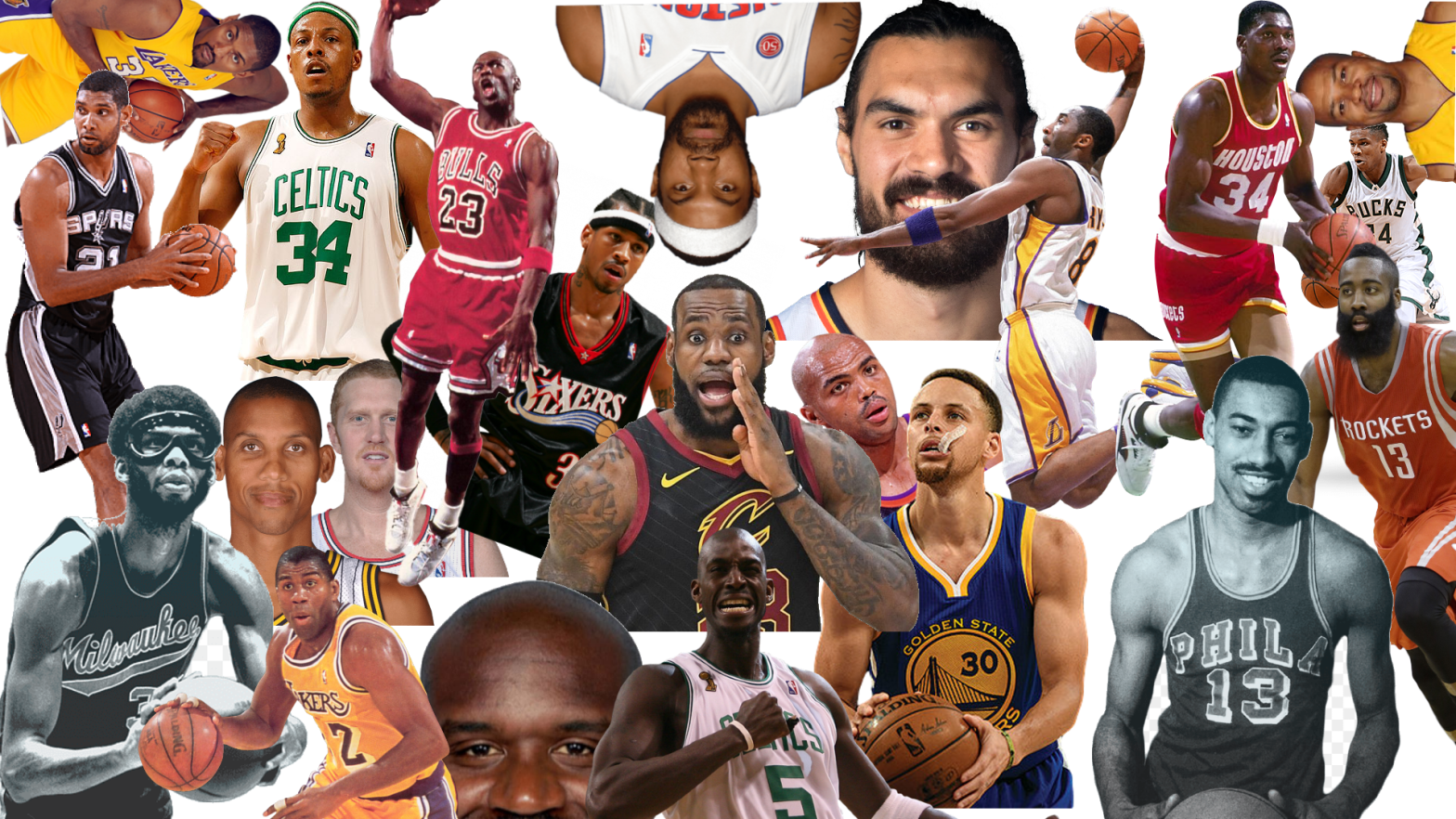
With virtually any human enterprise, we want to know who’s the best, the most influential, the greatest, and so on. We make  lists of the greatest films, greatest guitarists, greatest writers, and so on. The NBA is no different. We talk about greatest players, greatest teams, greatest coaches, greatest shooters, scorers, defenders, draft classes, big three’s, and so on. It’s fun. It’s fun to think about and talk about and read other people’s lists. 

Or, it should be fun. It seems to generate a great deal of anger in some people. Any list of greatest players or teams or point guards or whatever that I see is always followed by a series of infuriated disagreements. It’s fine to disagree, but the anger can get so strange and extreme. A pretty average “Top 10 Players Ever” list might look like this: 1. Michael Jordan 2. Lebron James 3. Kareem Abdul-Jabbar 4. Magic Johnson 5. Larry Bird 6. Bill Russell 7. Kobe Bryant 8. Tim Duncan 9. Wilt Chamberlain 10. Hakeem Olajuwon. That’s not my top 10 list, but it’s a pretty standard list, if you ask me. A lot of lists look pretty similar. But then you have guys that say things like, “If you don’t have Kobe in your top 3, you don’t know anything about basketball!” Really? I don’t know anything about basketball if I put Kobe a few places lower on a top 10 list? I don’t know anything about basketball? Not a single thing about it? 

That’s so stupid. The way I look at a top 10 greatest players list is that they’re pretty close. They’re all amazing players, nearly all just as good, so if I put someone at 8 and another person at 2, that’s not a huge gap for me. It’s not worth getting so riled up. 

Here’s another thing that happens: people will cite the opinions of NBA greats as being of more value than a non-NBA player’s opinions. It makes intuitive sense. NBA players, especially great ones, know the game better, they’re playing against top competition, so their opinions matter more. And certainly the opinions of NBA legends are incredibly valuable, insightful, and interesting, but their status as a great player doesn’t automatically make their view “correct.” Because, if you listen to enough NBA legends talk about the game, you’ll find they disagree with each other quite a lot. An NBA writer may put Hakeem at #11 while Kevin Durant puts Hakeem at #4, so you’d think that the NBA writer is just wrong because he’s just a writer, but another NBA great may also put Hakeem at #11, so now what?

It’s just all opinions, man. I love hearing other people’s NBA opinions even if they differ drastically from mine. It tells me a bit about them, how they see the game, what they value. It’s fun. We can go back and forth a bit, but in the end it’s just opinions.

Here’s an opinion of mine: I think there is a highlight bias in the collective NBA mind. Highlights are cool. They look sick. They’re exciting. But they don’t necessarily align entirely with a person’s ability to play basketball. There’s some correlation, of course; if a player has a lot of really great highlights, it’s likely that they are a pretty good player. But it’s not entirely related. Highlights, by definition, exclude lowlights. If you watch highlights of a player, it’s not gonna show them missing shots, turning over the ball, or making costly errors on defense. Sometimes people with great highlights make a lot of mistakes. 

I know people don’t base their entire opinion’s on a player’s caliber based on his highlights, but the exciting plays stick in a person’s mind more easily. 

So it’s my opinion that the highlight bias favors exciting perimeter players over less exciting “bigs.”

Here’s a sub-point to that broader point: it’s not just highlights, but people have a tendency to value “skill” over “ability.” This concept is exemplified perfectly by James Harden’s quote, “I wish I could be 7-feet, run and just dunk. That takes no skill at all.” This is a bit of trash talk about Giannis Antetokounmpo when the pair were MVP rivals. Now I could respond and say that Giannis does have a lot of skill, which is what I believe. But I’d rather take the quote at face value. Yes! If you could just dunk all the time, you would do it! Any player would do that! The dunk is the most efficient shot in the game! It’s like 99% accurate, if you can dunk, you should dunk!

This is what always annoyed me when talking about Shaquille O’Neal. People would say, “He’s just big and all he does is dunk.” I would disagree with that, but even if it was true… SO WHAT? He was the best player at the time. If you want to say that you don’t like his playstyle, that’s fine, but when we’re talking about the best player, the style shouldn’t really factor in. It’s just about who’s best. 

Like what was Shaq supposed to do? Was he supposed to say, “Hey guys, I know I’m bigger and stronger than anyone in the game, and I can dunk all the time,  but some people might not appreciate that, so I’m gonna take some wild fadeaways and cool step back threes just for fun.” When you’re on offense, you try to score, you don’t get any extra points for scoring in a more “skilled” manner. This also came up with field goal percentage. Shaq led the league in field goal percentage several times while also being near the top in scoring. That’s a good quality, in my opinion, but some would try to deflect the point by saying, “Well, it’s only cause he shoots so close to the basket.” So? He’s able to get close to the basket more effectively than anyone. When you shoot the ball, you want it to go in. 

The debate that generates the most emotion is who’s better between Lebron James and Michael Jordan. Personally I think there are a lot of players that could be considered the GOAT, but most people pick one of these two. People are so passionate about this one. It’s funny to me because I think most people who pick Lebron would put MJ at #2, and most people who pick MJ would put Lebron at #2. It’s just one number off, but it’s so desperately  important for people.

Sometimes I see people say things like “MJ never won without Pippen,” as part of their argument that Kobe or Lebron or whoever else was better than MJ. It’s fine to think those guys are better than MJ, but this point always seems so silly to me. What was Jordan supposed to do, exactly? Was he supposed to say: “Hey, I just won three championships in a row with my teammate Scottie Pippen. He’s a great player and I’m the best. I retired, came back, and we won two more championships. But you know what? In the future there will be a similar player to me that is part of an amazing duo [Shaq and Kobe], but he’ll separate from his amazing teammate and then win two championships without him, proving that he can win without Shaq. Because I know this, somehow, I need to prove that I can win without my teammate, so I’m going to force management to trade Pippen away for a young Tracy McGrady so I can prove that I can win a championship without Pippen.”? 

Ridiculous.

Just one more thing: we talk about underrated players and overrated players. And I used to think of a player like Moses Malone as a really underrated player because the typical 5 best centers are talked about way more often and he’s not mentioned much but he was one of the best players and all that. But then I look at rankings, and I rank him around the same as most lists. Usually he’s #6 or #7 on all-time centers lists and in the 17-22 range on all-time players lists, which is where I’d rank him. So I don’t really think he’s underrated, just not talked about much.

And that’s that. My actual NBA opinions can get very wild, and it’s fun!

Celebrities are Stupid and Pointless [except the one that I like (Brie Larson, please go out with me)]

So recently an event called the Met Gala happened. Well, not recently, but it was recent when I started writing this. Then I took a long break and moved to another continent. They call it the Met Gala, but I don’t think I ever see, you know, Tom Seaver there. Or Darryl Strawberry. Definitely not Mike Piazza. I don’t know how it can be the Met Gala without those guys, but I digress. 

The Met Gala is a special event where celebrities come together and wear the stupidest things that humanity could possibly imagine. And they all get together and talk about how amazing they all are for being celebrities and attending this celebrity event for celebrities. And the rest of us are meant to watch admiringly from behind an invisible [though incredibly strict] societal barrier between us and them. Because they are our superiors. And we must honor them.

In reality, though, they’re all just out-of-touch, phony people who are completely full of themselves. Phoniness, out-of-touchness, and full-of-onselfness are bad qualities, no matter who has those qualities, and celebrities have them in abundance.  Except Brie Larson. She’s cool. I can just tell, somehow. She’s chill, she’s pretty, and if she ever felt inclined to go out with me, I think that would be a pretty cool thing. Maybe we could even go to the next Met Gala together.

But hey, it’s possible that I’m being a bit too harsh on the celebrities. They can’t all be all that bad all the time. I’m sure some celebrities (like Brie Larson, for example) are very nice people. If you saw them, you’d say “Hello there,” and they’d say “Nice weather we’re having!” or something along those lines. That’s pretty nice. Some are nice, fine, but many have those aforementioned bad qualities. Qualities that you wouldn’t like in a “regular” person, whatever that means.

And it seems like celebrities are just getting worse and worse, doesn’t it? In the 20th century, there was at least a general  sense of merit. Babe Ruth was so famous because he was good at hitting home runs. Marlon Brando was good at acting. Michael Jackson was good at making music, and so on. We still have some of those. People are still good at hitting home runs and acting and making music. But we also have celebrities who don’t seem to do anything, as far as I can tell. Social media influencers and socialites and whatever other terms they use. Famous for being famous. And, admittedly, we did have that before with people like Zsa Zsa Gabor. She was kinda famous for being famous, but the level of fame and the commonality of the “famous for being famous” phenomenon is so much greater in the 21st century. 5 of the top 20 most followed people on Instagram are famous for being famous [by my understanding of the phrase (and in my personal opinion)].

Not only all of that, but they’re also consuming us off the proverbial cliff. Celebrities are unsustainable, that’s what I mean. Their countless vacations with private jets, their giant mansions, huge swimming pools, car collections, almost everything they do is just horrible for the environment. They’re just so bad. I mean, if you were an interplanetary consultant, and you came to Earth to analyze its climate problems, you’d quickly say, “First off, you gotta get rid of these fossil fuel companies and their lobbyists, they’re just the worst.” Then the second thing you’d say is, “Man, these celebrities are really fucking it all up. Definitely get rid of those people. Not Brie Larson, though, her smile alone could light up a city.”

Okay, so I’ve been pretty critical of the celebrities so far. Let me advocate on their behalf for a quick second. I don’t think celebrities should be gawked at or harassed or stalked or anything like that. If a celebrity wants to enjoy a cappuccino at an outdoor cafe, they should be able to do so in peace. If you’re walking by, you shouldn’t stare at them or bother them. Unless the person walking by is me and the person enjoying the cappuccino is Brie Larson. In that case, I will walk up to her and chat her up. That wouldn’t even be bothering her, it would just be a great moment for us.

People shouldn’t take photos or videos of celebrities when they’re out and about. And those photos get on the covers of Star and People and Us magazines, and that’s supposed to be important somehow. If you’re a paparazzi photographer, you should go home and rethink your life, but you probably won’t.

Don’t mistreat them, that’s the basic point.

So celebrities are bad, and they should be criticized for their harmful behavior and mistakes [Brie Larson never makes any] but we shouldn’t be horrible to them for idiotic reasons. We shouldn’t stalk them. We shouldn’t obsess over them. We shouldn’t concern ourselves over their dating lives [well, in Brie Larson’s case, I think we can all agree that she should date me.]

Nothing that I’ve said is particularly groundbreaking or profound or insightful. In fact, I think most people would agree that we shouldn’t care too much about celebrities. I’ve never heard anyone say, “You know what would be good for me personally and for society as a whole? It’d be good to become really obsessed with celebrities. That should be the main focal point of life. Let’s do that.” There doesn’t exist a single person who believes that celebrity obsession and celebrity worship should dominate our lives. Yet, celebrity obsession abounds…

Our obsession with celebrities’ dating/personal lives is particularly pointless. Hot/successful/famous/ talented people will date and have sex with other hot/successful/famous/talented people. Why is this treated as crazy gossip? It’s so unbearably obvious. Oh, the sexy actor is dating the sexy actress? I’m so shocked! The dating lives of celebrities should be of no interest to anyone else, except me and Brie Larson. That’s different. I actually have strong feelings for her cause I basically know her, and we would definitely have a special connection, okay? Brie and I get each other.

Society’s celebrity obsession [that I’m not a part of] creates a horrible series of events. As our society becomes more obsessed with celebrities, the result is that more and more people feel a stronger and stronger desire to become celebrities. Celebrity wannabes resort to more and more stupid/pointless methods of becoming celebrities. So celebrities, as a whole, become even more stupid and pointless than they already were. Wanting to be a singer or an actor is okay. Those are fine, creative pursuits, but the desire to just be a celebrity is a waste.

With the proliferation of social media, celebrities are more inclined to share their support for various socio-political causes and their opinions on various current issues. That’s not entirely new, but it’s more common now than ever. Before, you had to play a big concert just to say, “Hey, maybe the U.S. shouldn’t kill innocent people in Iraq,” but now celebrities  can just whip out a cell phone, type 140 characters, and broadcast their opinions to millions of people. Why do they do this? There are multiple reasons. There’s some pressure to do so. A lot of people, for some reason, feel that their favorite celebrities are obligated to voice their opinion on modern issues and conflicts. Some celebrities recognize that it’s good for their personal brand to be seen as a socially conscious person. So even though they don’t know much about any issue, they’ll take an easy stance to support black people or gay people or the environment or something like that. And some celebrities do educate themselves and do feel compelled to lend their support to a certain cause. Often there’s a combination of reasons.

But for the most part, why would we give a single shit? Some of these issues are very important, so why would we look to an actor’s opinion to help formulate our own opinion? Unless that actor is Brie Larson; she so eloquently sheds light on social issues. It’s so beautiful. But maybe we’re not basing our opinions on what celebrities say, maybe we just want them to express good views on current events. Why? I mean, sure, it’s great when actors are good people. I want actors to be good people. I want my mailman and bartender to be good people, but I don’t expect them to give me their beliefs on the Russia-Ukraine war. They might even have shitty opinions on it; it wouldn’t change the actual ensuing events of the war. 

Alas, the reality of fame, though. As much as I don’t like it, people pay attention to celebrities’ opinions. Taylor Swift tells people to register to vote, and the vote.org sees a big upsurge in voter registration. So maybe they should use their fame to promote good causes? And if I become a famous but elusive writer, will I feel the moral obligation to give my opinions on wars [they’re bad]? Is it true that celebrities are obligated to use their platform and influence to raise awareness and support change on important issues, despite how stupid that arrangement is? I think the question of whether famous people should speak out on issues is a question for undergraduate philosophy students to discuss in their ethics class. That question is not the point of this post. 

The point of this post is to encourage non-celebrities [like myself] to stop caring about celebrities because it’s stupid and pointless. Stop caring about celebrities’ personal lives, their homes, the clothes they wear, the restaurants they frequent, the people they date, and so on. I’m not saying you can’t enjoy their art. That part is great, enjoy as much art as possible. Just stop concerning yourselves with celebrities as people. From this day forward, I will stop caring about celebrities. There’s one exception, though, which is Brie Larson, because I love her.

One more thing: the whole pointless game of celebrity obsession is given away by the fact that celebrities are often mistaken for other celebrities. A person sees a celebrity, recognizes that the person is famous, but doesn’t really know who it is, but they’re excited to see and talk to them, so they guess the celebrity’s name, and they guess wrong. A person sees a person and thinks, “hey that’s an actor! That’s Elijah Wood, isn’t it? I’m gonna say ‘hi’ to him and tell him I loved the Lord of the Rings.” Then Daniel Radcliffe replies politely, says thank you, and maybe even poses for a picture with the other person. This happens with a lot of actors and actresses. If you can’t really recognize them, then you’re probably not a huge fan of their work, and if you’re not a huge fan of their work, then why is it exciting to meet them?

What is the speed of light in football fields per business day?

Speed is represented as a certain distance divided by a certain time. Common units of speed are miles per hour, meters per second, and kilometers per hour. For example, if I were to drive my car 120 miles in 2 hours, we would say that my average speed was 60 miles per hour. 

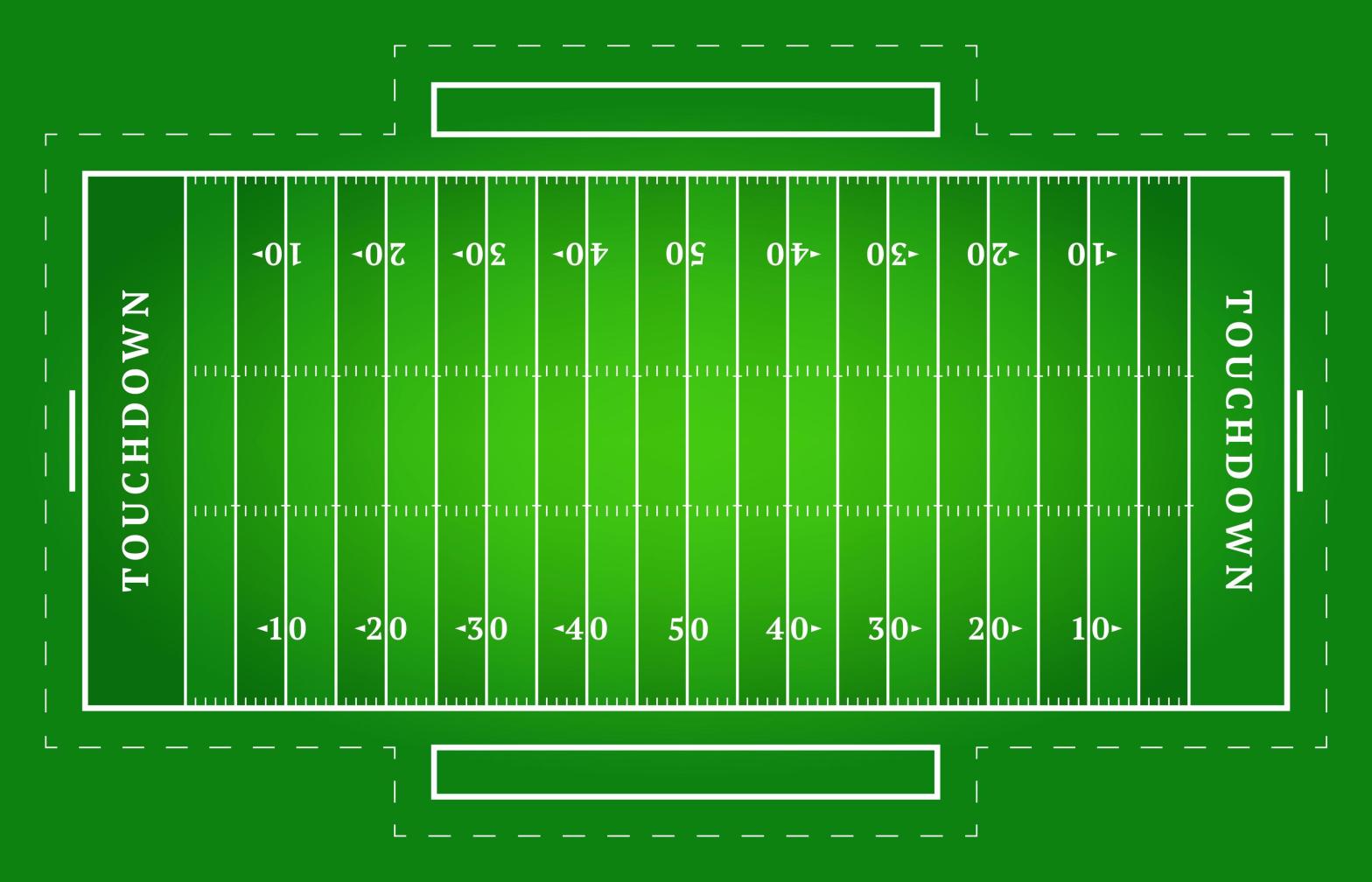
I want to express the speed of light in two of the most beloved units in the United States of America: football fields and business days. Now, football fields is a unit that is sometimes used for area [i.e. this parking lot is bigger than two football fields] and sometimes used for distance [i.e. the Moon is over 4 million football fields away]. Obviously for this exercise we will be taking football fields as a unit of distance. 

But how long is a football field? Well, the actual area where you’re allowed to touch the ball without being considered out of bounds is a 120-yard by 53.5-yard rectangle, which includes the end zones. But you could argue that the playing field is 100 yards long, with a 10-yard end zone on each end. So is a football field 120 yards long or 100 yards long? In my opinion, when people use the football field unit of distance, they’re typically referring to a length of 100 yards, so that’s what we’ll use.

So, in physics class, I learned that the speed of light is 299,792,458 meters per second. According to Google, 1 meter = 1.09361 yards. After performing some simple multiplication on my calculator, we find that the speed of light is 327,856,030 yards/second, which is 3,278,560.3 football fields/second.

Now, the business day is where things get more interesting. So, 1 day = 24 hours = 1,440 minutes = 86,400 seconds. But business days do not equal days. Over the course of 7 days, 5 business days occur. So 1 business day should equal (1 day)*(7/5), right? 

Wrong! That would assume that every week is exactly alike, which they are not.

At time of writing, there are 11 federal holidays in the United States. Okay, so over the course of an entire year, there are 365 days. So there are, on average, 104.2857 non-work days and 260.7143 work days. So if we add 11 days to the non-work days [and subtract 11 from the work days], we get 115.2857 non-work days and 249.7143 work days. So instead of 1 business day = (1 day)*(7/5), we should have 1 business day = (1 day)(365/249.7145), which would mean 1 business day = 1.4617 days.

But wait there for just one second! Not all federal holidays are the same. Some are fixed to a specific day of the week [Thanksgiving on Thursday, Martin Luther King Jr. Day on Monday, etc.], and others are fixed to a specific date [New Year’s Day on 1/1, Christmas on 12/25, etc.]. So the federal holidays don’t all take away one work day every year. MLK Jr. Day, Washington’s Birthday [colloquially called “President’s Day”], Memorial Day, Labor Day, Columbus Day, and Thanksgiving are all fixed to specific days of the week. That means that we’re guaranteed to have 6 days taken from our initial 260.7143 work days and added to our initial 104.2857 non-work days.

What do we do with the rest, though? 

Well, the non-day-of-the-week-fixed federal holidays [NDOTWFFH’s] are New Year’s Day, Juneteenth, Independence Day, Memorial Day [formerly known as Armistice Day], and Christmas. At first I thought I’d just multiply the remaining, non-day-of-the-week-fixed federal holidays by 5/7 and then add that to the non-work day total. Easy. But then I started second-guessing myself. It seems obvious, but is it really true that all the NDOTWFFH’s have a 5/7 chance of being on a weekday? 

I don’t know why they wouldn’t. Maybe I just doubt my own mind all the time.

Anyway, I started a new Google Sheet. I began to fill it with dates and corresponding days of the week. I set to determine the likelihood that any given NDOTWFFH would fall on a weekday. Then I thought, “What am I doing?” I just went to the U.S. Office of Personnel Management website, and they list all of the federal holidays for each year, and what date they fall on. And guess what? We get 11 federal holidays no matter what days the NDOTWFFH’s fall on! Duh! Now that I think about it, it would be pretty fucked up if they just gave fewer holidays if Christmas was on Saturday. But hey, it’s a fucked up world.

So where are we, then? We’re back to 115.2857 non-work days and 249.7143 work days. 

Wait a second, LEAP DAY! Leap Day, what a beautiful day. In the average leap year, we’d have [(366 days)*(5/7)] – 11 federal holidays = 250.4286 work days. In the average four-year cycle, we’d have [(249.7143 work days)*(3)]+250.4286 work days = 999.57146 work days. So close to one thousand! And over the course of four years, we have 1461 days in total. 

Therefore, 1 business day = (1 day)*(1461/999.57146) = 1.4616263653626124939581608302422 days. That’s according to my calculator. 

We’re getting pretty close now, can you feel it? It’s exciting. 

The speed of light is (3,278,560.3 football fields/second)*(86,400 seconds/1 day)*(1.4616263653626124939581608302422 days/1 business day) = 414,031,407,122.3 football fields per business day. That’s a lot!

Individuals and Society [we live in one]

I currently work for a fairly small company, and it’s a fairly relaxed work environment. One day my co-workers were discussing some of the problems in the world and what ought to be done about them. It was one of those conversations that should’ve ended way earlier than it did. Both parties, we’ll call them John and Ben, were making essentially the same points again and again. The conversation was looping around without much progress. 

When I reflected on this conversation later, I realized that Ben was talking about the world, civilization, society, or at the very least, our society [the United States], and John was just talking about John. They both agreed that there were economic, societal, psychological, and technological problems with the world. Ben talked about how human consciousness has evolved significantly over the last few millennia, in his opinion, and it should continue to evolve with the incredible access to knowledge. With that evolved consciousness, we could throw off silly notions like nationalism and other myths, and in doing so our species can flourish. And he advocated some change in policies about the environment and guns and agriculture and technology. It was some decent, wide-ranging stuff.

John, on the other hand, suggested that the solution to the world’s problems was the ownership and sustainable cultivation of land. He used the term “sustainable farming” many, many times. Ben agreed that more sustainable farming practices are desirable, but there are many other problems that demand very different responses. But John kept insisting that sustainable farming/living off the land is all we need to do. He presented it as a societal solution, that it would improve society at large, but really it was a personal solution. It was a solution for him, in response to the ills of the world. 

I occasionally run into this societal problem/individual solution phenomenon in other conversations. It’s very common when discussing economics. For example, you might look at society, and when you do that, you might notice that there are companies, such as McDonald’s, that generate around $20,000,000,000 of revenue per year. Of course it generates that revenue by people making hamburgers and french fries and cleaning the dining area and operating the cash register and so on. These workers, whose labor the $20 billion is built upon, are mostly unable to purchase basic necessities with their McDonald’s wages. When I say “basic necessities,” I mean food, running water, a modest shelter [like a cheap apartment], and an ability to get around the city, whether by car or public transportation. They work and they work, but are unable to afford the basics.

Now, you might look at this situation and say, “Well, this seems like a problem, a societal problem.” We probably shouldn’t have a society where that type of arrangement exists. People who generate such gargantuan profits should be able to take care of themselves, at the very least. We’d certainly all be against an arrangement where McDonald’s makes twice as much profit, but the store workers are paid no wages at all, and are just given a cheeseburger on their lunch break to sustain themselves. That’s surely worse than the current arrangement, but the current arrangement can also be improved.

And then we could discuss how to improve the situation, whether by some better minimum wage, a restructuring of corporations of a certain revenue threshold, or some other regulations. When you bring up these kinds of points, a common response is, “just quit your job if you don’t like it,” which doesn’t address, or even acknowledge the existence of, the societal problem. It’s an individual solution [it’s hard to even call it that] to a societal problem.

In truth, they don’t offer the advice “just quit your job” as a solution at all. They don’t want to solve any problem, societal or individual. They just want to throw out something so they can reject the very idea that there is a problem. If I can throw out this little bullshit “solution,” it stands to reason, then there isn’t any problem at all, is there? But they’re presenting it as a solution to the problem, not as a denial of the problem’s existence. Because if they were to say, “no, I don’t think that McDonald’s arrangement is a problem at all with our society,” then they might get dragged into an argument about what society is, what it ought to be, and so on. They just want to say, “quit your job,” then wipe their hands clean. Another problem solved!

But let’s take that “solution” seriously for a second. Let’s say that the arrangement is a problem in society, and the solution is for those affected to quit their jobs. So, tomorrow, nearly everyone who works at McDonald’s, Wendy’s, Burger King, Taco Bell, Subway, KFC, Domino’s, Panda Express, Pizza Hut, Little Caesar’s, Walmart, Target, Home Depot, CVS, 7-11, Amazon, Walgreens, and basically every grocery store, all quit their jobs. They all just stopped going to work tomorrow. Some chaos would ensue. Perhaps, then, the hundreds of thousands of workers who just quit will look around at all the other workers who just quit their jobs, and they’ll realize that they’re all in the same boat. Though they work in different industries, some make coffee, others deliver packages and so on, their experience is shared. Then maybe that could develop into a camaraderie based on their shared experience, a class consciousness if you will. With that class consciousness, they could demand better conditions. 

I have a hard time believing that the “just quit your job” guy really wants that solution. 

I think that the individual-solution-for-societal-problem [ISFSP] comes about from people who either believe that society doesn’t exist [Margaret Thatcher] or that society-wide problems/solutions don’t exist or, at the very least, they’re not worth considering.

I would, of course, disagree. One example comes to mind. There used to be lead in gasoline. Our society is set up in such a way that most people need to use gasoline-powered cars to get around. The lead would get into the air, and people breathe air, and breathing air with lead in it is very bad. Lead in gasoline correlated with a decrease in children’s school performance, and it’s probable that lead led to violent crime. That’s a societal problem if I’ve ever heard one. It’s such a societal problem that it’s difficult to even come up with an ISFSP for it. Let’s try, though.

“Oh, you think leaded gasoline is bad? Why don’t you just… uh, invent a lead filtering, air purifying helmet to wear on your head at all times?” Yeah, I suppose people could have done that. Or just get rid of the lead in gasoline, which is what we did. 

So what am I trying to say? What’s the point of all this? Well, I’m trying to say that societal problems exist, and should be treated as societal problems, with societal solutions. It’s good to discuss these problems and solutions, but if you run into an ISFSP person, you might find yourself dragged into a circular, pointless conversation. ISFSP sneakily changes the question at hand. Instead of “should mega-billion-dollar corporations pay a living wage?” we’re now discussing “should people who don’t like their jobs quit those jobs?”

ISFSP people don’t like that first question. Corporations pay what they pay, people work, profits are made, there is no “should” at all, they often. In that case, the conversation is close to becoming pointless. What I’m suggesting is that we learn to recognize ISFSP when we see it. When it arises, we should acknowledge it and open up a dialogue about it. Just ask if the ISFSP believes that the original topic of conversation, the societal problem, is a problem at all. Often they don’t. Asking them will at least force them to admit that no, they don’t think that people not making a living wage is a problem. At least you’d know where you stand at that point. They then have to defend a society wherein so many people work but cannot afford to live. 

I think it’s worth asking an ISFSP person what they think the point of society is and whether we should bother improving it at all. You likely won’t change their mind, but it’s more valuable than doing the circular conversation I’ve described. 

I’m not saying that individual solutions are always useless. Society’s not perfect, and you gotta play the hand you’re dealt, but societal solutions are important too, and it’s worthwhile to recognize when one party is talking about society and the other is talking about an individual in society.

Is Technology Even Good?

I’m at a bit of a crossroads in my life, which has happened many times before. Life is just one crossroad after another. Is it a crossroad or a crossroads? Seems like crossroads can be singular or plural. Is that right? Anyway, I’m at a crossing of roads, of sorts. New beginnings, big decisions, life changes and all that. My health has improved a lot. My diet changed for the better, I stopped drinking, I’m exercising more, and my sleep… well, it hasn’t gotten worse, that’s for sure. 

Within this streak of self-improvement, I decided to get rid of my smartphone. I’m done with it! I. Am. Done. It’s a huge time waster, it’s designed to play little addictive tricks on my brain, social media is bad for mental health, all of that and much more. I feel like we all know most of that. Phone bad. Phone very very bad. 

Now I’m not some genius or hero for giving up my smartphone. Far from it. I’m a genius/hero for other reasons, obviously. Anyway, I still feel like I need some kind of cell phone because sometimes my boss has to call me when we’re working in different locations. I still have my old LG cell phone, the one before my smartphone. It’s a good phone. It slides up for a full keyboard. I charged it, it held the charge, and all the buttons worked perfectly. 

So I took it to the Verizon store to get the old phone in service again with my current phone number. But no. The LG phone is 3G, which doesn’t exist any more, apparently. So this cell phone, which is perfectly functional, just as much as it was the day I got it, is now completely useless. Might as well be a clump of dirt. I was disappointed by that. I clearly don’t understand cellular technology at all, but I really thought I would be able to just use a cell phone to make calls and texts. Is that a stupid thing to expect? I mean, you can use a telephone from decades and decades ago, but with cell phones I guess you gotta stay with the times or get left behind.

I asked the guy at the Verizon store if they had any flip phones that still work, and they had one, but it was around $150. I thought it’d be like $30 because of how [apparently] obsolete they are. I left. What I really want is to have a basic phone with a really cheap plan. That’s all I want in this world. I’m paying a lot for my infinite, unlimited, inexhaustible amount of data and whatnot. Mint Mobile, that’s what I want. But there are no Mint Mobile stores, at least not anywhere near me. But hey, there’s a Cricket Wireless store pretty close by. They’re pretty cheap, I think.

The next stop on my long journey was, in fact, Cricket Wireless. I told the clerk that I wanted a new phone, and she presented a number of intriguing offers. And they were really good deals, honestly. If you buy a certain plan for a certain duration, you get a certain smartphone. Pretty advanced phone, but I explained that I really really really wanted a phone that just does talk and text. She got one, she showed me the plan, and it was fine. But then it wasn’t. 

See, in order to transfer my current phone number to the new Cricket Wireless flip phone, I needed my current T-Mobile account # and transfer # and PIN of some kind. I don’t have that. “It’s on your T-Mobile app,” she says. I don’t have that. “Well, there’s a T-Mobile store a few doors down, they can help you.” Another obstacle on our hero’s journey! I ask the T-Mobile guy for the info and he says, “It’s on your T-Mobile app.” I don’t have that. “You gotta call customer service then, we can’t look up that info in the store.” I called, and there was a thirty-minute wait so they were gonna call me back. At this point I knew it was going to be a total nightmare to get the necessary information.

When I first got the smartphone, I had Sprint. I got the phone from the Sprint store, I used Sprint data and Sprint calls and texts, I paid my bills to Sprint, and I had a Sprint app and all that. Eventually, Sprint was absorbed by T-Mobile. That’s fine, but I never got fully integrated into T-Mobile. I didn’t get an account number or any account at all. For a while I was still paying my bill via the Sprint app. Then, one year ago, I was about to leave the United States for a few months, so I wanted to put a pause on my phone plan since I was in a month-to-month situation anyway.

Boy, did that prove to be impossible.

I got stuck in some sort of unsolvable labyrinth of transferring phone calls. I talked to a Sprint guy, then a T-Mobile guy, then another Sprint guy, and on and on. I gave them my phone number, name, date of birth, all the information I could, but it was futile. I seem to have fallen into some kind of cellular black hole. They know I have to pay every month [I just “pay as guest” from the link in their automatic text reminder], but they can’t find me in their system. It was like Sisyphus but instead of pushing a boulder forever, it’s being on the phone forever. Not quite as bad.

Anyway, I walked around Target, waiting for T-Mobile to call me back, and I decided, “Fuck it, I’ll just buy a flip phone here at Target, and figure out a way to get my phone number on it with a cheap plan.” And that’s what I did. There were still a few hurdles, but I don’t want to get into them now. I’ve already written 1,000 words about buying a cell phone. 

So, taking a step back in technology can be surprisingly difficult. Then why do it? As I said, social media is manipulative, it makes you sad, it’s addictive by design. Your phone tracks you and it   and the more you use your phone, the more you become dependent on it. There are so many aspects of social media and smartphones that are bad for our well-being. When I bring up these points, many people look at me as if I’m explaining that the sky is blue. Of course social media and smartphones are bad for mental health, everyone knows that, so why bring it up?  I find this very bizarre, but hey, that’s the nature of addiction. I know that alcohol is bad for me, but I still occasionally drink it.

Algorithm. I’ve grown to hate this word and all it encompasses. The almighty algorithms that dominate our digital lives, that affect our non-digital lives as well. Now I’m just an idiot, and I don’t know what an algorithm really is. Maybe it’s a very general computer term, and when I use word “algorithm,” what I’m talking about are the super advanced algorithms of the biggest tech companies, that absorb and process unimaginable amounts of data, then spew out a stream of content uniquely tailored to you.  

I don’t know the future, but one would have to imagine that personal data collection will become more advanced and invasive, and the algorithms will become more advanced at personalizing things for us, if we allow them. Google Home, Google Pay, Google Mail [gmail], Google Maps, and YouTube all collaborate to form this giant tapestry of your activity, then it suggests the next stitch. 

But it doesn’t necessarily suggest things that will improve our lives. It merely suggests things we’re most likely to click on, videos we’re most likely to watch, posts that will most likely keep us scrolling, and products we’re most likely to buy, whether those things are good for us or not. We seem to be approaching a bastardized version of the Mirror of Erised. Instead of showing our deepest, most desperate desires, our phones reflect our most basic consumerist impulses. 

So I don’t really care for algorithms and I severely dislike how much they’ve come to infect our way of life. But just because I got rid of my smartphone does not mean that I have rid myself of the influence of algorithms. I’m trying to get a new job, for instance, which puts me at the mercy of the sneaky, devilish algorithms of LinkedIn and Indeed and Ziprecruiter and so on. I’m still beholden to algorithms, unfortunately. And then there’s the fact that I’m posting this in the first place! There are algorithms that factor into the popularity of this very post. They’re watching me! And I’m cognizant of their presence, so I try to choose the right tags, post at the right time, give a good title, so that the algorithm may boost the post just a little bit. Trying to please an algorithm is a soulless experience.

I guess I’m trying to make the points that current technology creates problems, the pervasiveness of algorithms in our lives is bad, and I recommend taking steps backward, like getting rid of your smartphone. I already feel better without my smartphone, and I hope to take more steps backward soon.

Then there’s this other thing called A.I. Or, as Steven Spielberg calls it, “A.I. Artificial Intelligence.” Why does he do that? Just call the movie A.I. We know that you’re not making a biopic of Allen Iverson, Steven. He did the same thing with “E.T. the Extra-Terrestrial.” I’m surprised he didn’t name his 2016 film “BFG: Big Friendly Giant.”

Anyway, I don’t fully understand A.I., and sometimes people equate that lack of understanding with an illegitimacy of critique. You can’t criticize the technology, they say, unless you fully understand it. That’s obviously ridiculous. There is a lot of evidence to support the claim that social media applications have a generally negative impact on our mental health. I don’t have to be a neuroscientist, psychologist, computer programmer, and big tech CEO to know that and criticize it. 

So, A.I. has tremendous potential. Some of the potential is good, like assistance with farming practices and assistance with medical diagnosis/treatment. But it also has extremely negative potential such as disrupting economic/financial systems, A.I.-infused military weapons for mass destruction and targeted assassination, more advanced surveillance than any in history, and a possible “point of no return,” where A.I. dominates so much of our civilization that it becomes extremely difficult [or impossible] for an individual to secure housing, food, or other necessities without A.I. being involved in some way. 

We don’t really know, but it could lead to some very bad things. We ought to try putting some reins on technology before it’s too late. There are, of course, funny “A.I.-generated,” or so the channels claim, YouTube videos. Some have Elvis Presley singing that he likes big butts and he cannot lie, some feature Harry Potter characters as bodybuilders, and some show Donald Trump and Joe Biden playing video games together. They’re funny, to be honest. They can be funny. Then someone will comment something to the effect of: “*AI will take over the world!* Meanwhile AI:” As if the ridiculousness of the videos negates the possibility of A.I. being used for nefarious purposes. As if A.I. can’t be used for different things. It’d be like if someone said, “how can drones be used for bad things when I’m using one to take beautiful footage of Hawaii?”  

Anyway, I just wanna mention one more specific example about technology that just bugs me. When I was in middle school, there was a device capable of holding thousands upon thousands of songs. It was small enough to fit in your pocket or purse, with headphones tied around it. It was incredibly easy to use. You just plug it in and drag songs onto the device. Then on the device you can find music by artist, by album, by song, you could shuffle, you could make playlists, there were no ads, it was amazing. It was perfect. 

And now the most common way to listen to music is to download an app. You can make playlists, but you can’t listen to them in order, it’s always on shuffle, and there’s a few obnoxious advertisements after every three or four songs. You can’t listen to full albums. You can’t even always listen to specific songs. You pick a song, and it generates a playlist around that song, which may start with that song. And you have a limited number of skips. If you don’t like these features, you have to pay $10 every month. Month after month after month after month, just to have the app behave like the device from decades ago. What a sick joke. 

I still have the old device, but the battery doesn’t work. This is another shitty aspect of technology, the shelf life. The product, the iPod, could be used for my whole life, as long as I can change out the battery. But that’s not valuable to the company that makes the iPod, so the plan is to use the device for a couple years, then set it down forever. Fucking stupid, I’m gonna figure out a way to fix the battery. Bye!

A Single Day’s Worth of QR Codes

I’ve become increasingly fascinated by QR codes. I don’t know what QR stands for, and I have no intention of looking it up, but I wanted to take a look at the QR codes that I’d see on a typical day.

So I’m in my last semester of university, so I live in a house with other people. That’s a bit of the old context for ya. I walked into the kitchen, and the first QR code of the day was on a pack of bottles of iced tea. Well, it’s just tea, not necessarily iced. You can put it in the fridge if you want, but these were just on the counter. Apparently I could’ve scanned the code for more food information, but I didn’t.

I turned on the TV because I’m evidently incapable of eating breakfast without it. Maybe I should reconsider my life choices. Anyway, an advertisement came on for a phone app that somehow helps you buy tickets to sporting events. A giant QR code appeared on screen, which facilitated the download of the app. I did not download it. If I wanted to buy tickets to sporting events, I’d go to google.com, then type “[sports team name] tickets,” and go from there.

As I prepared my breakfast, I noticed a Walmart receipt that someone had left on the counter. There was a little QR code on the bottom of the receipt. I’m not sure what it did, but does every Walmart receipt have a QR code on it? Do we need that? Why? That’s approximately a zillion QR codes a day, just from one company. It’s a bit overwhelming to think about. I guess they’re probably not unique to each receipt, but more general. Like it probably takes you to walmart.com or something. But that prompts the question: what person would know how to use a QR code and not know how to go to walmart.com? No one.

I only found one QR code in my own room while I was getting dressed. It was printed on the first page of a large packet I received in the mail. Apparently the bank that I use is going to be bought by a different bank, and they wanted to welcome me to the new bank for some reason. It’s funny because right under the QR code, it shows the URL destination. So again, I could just type that in.

Then I went to my university, where I was promptly bombarded with QR codes everywhere I looked. They were on bulletin boards and on posters in hallways and on COVID test vending machines and on normal vending machines and on shelves in the bookstore and on professors’ office doors and on random doors leading into random rooms in random buildings. I took a picture of every QR code I noticed, which came to 107, just on the university campus.

Being a university student, I think that I’d come across more QR codes than the “average person,” whoever they are, out there in the world. Maybe it’s you. That being said, I was still pretty shocked by the sheer volume of QR codes that were present in a simple day of pursuing a B.S. degree. To be fair, there were some duplicates. For example, someone had put up flyers advertising their photographic abilities to take professional headshots. But I want some unprofessional headshots! I saw a couple of those flyers, but I still counted them as part of my QR code total. 

Most of the QR codes promised “more information,” as if we needed any more of that. We have more information now than ever before. Enough! Some QR codes were related to upcoming events, and presumably you could scan the code to register for the event or buy tickets. That’s actually pretty convenient and helpful, I would assume. I don’t go to many events. 

The most memorable QR code from the university was located in the Arts & Letters building. I had to go there for a one-on-one meeting with my professor about my progress on my final essay [I’m gonna do it all on the last day]. One of the other professor’s office doors was completely filled with flyers, and one of those flyers had a particularly juicy QR code. An illustration of a human hand pointed to the code, and the flier urged you to point “your fancy smartphone at the strange agglomeration of black squares on a white field (or are they white squares on a black field? the mind boggles).” Cheeky! Seems others are fascinated by these codes as well. Nevertheless, I did not take the flier’s advice.

I went home for a quick little lunch. I made myself a pathetic little quesadilla. The package of tortillas had a QR code on it, and the package of cheese had a QR code on it. A full QR code meal right there. Then I drove back to the university. There’s a major intersection right outside my neighborhood. On one of the corners, a chain link fence separates the sidewalk from a bunch of trees, which separates the fence from a park, which separates the trees from whatever lies beyond. But that chain link fence is used for community announcements and information and stuff. I saw two posters with QR codes on them.

After all of my classes, I went to the gas station to fill up my car with gasoline. When I got there, you guessed it, I was greeted by a marvelous QR code by the pump. The code was doing its best to coax me into applying for a Shell credit card that would supposedly add fulfillment and happiness to my life. But I don’t want any more credit cards! No more!

Then I went to CVS to purchase a few items. Near the entrance, a display advertised some kind of handheld machine. The user is supposed to hold up the machine to their face, insert part of the machine into their nostrils, and then the machine is supposed to clean your sinuses, or something. The accompanying QR code promised a video demonstration of the device. But alas, I have no such need for sinus cleansing apparatus. The next display, with its own QR code, informed me of a rewards program with CVS. I don’t want it.

To be honest, when I’m in CVS, my mind goes into a strange state, and my senses dial down. I flow from aisle to aisle, like a drifter from town to town.

Anyway, there may have been some QR codes that I missed, but there was one posted right by the checkout. It would take me to a survey where I could rate the service at this CVS. I was tempted to take the survey and give five stars or two thumbs up or 10/10 or “excellent” or whatever was the highest. It’s a fine CVS, like any other, but I know that corporations place a weirdly high value on surveys and bullshit like that. So maybe it would help this local CVS and its workers if I did the survey. But I still didn’t. “Next time,” I deceptively told myself. I did notice a QR code on the container of protein powder that I bought. I believe that if my muscles got a little bit bigger, I would become happy somehow. Still a work in progress.

The QR codes/hour dropped dramatically after I left the university. I was scrolling through Instagram to pass the time. I follow the local Audubon… chapter or whatever it’s called. They made a post about a couple of events that they were coordinating. The post had two QR codes for more information on the events. It’s funny, of course, because I was scrolling on my phone, which I use to scan QR codes. A phone’s camera can’t scan its own screen, like a man can’t see his own eyes. 

Later in the evening I was trying to relax, so I prepared myself a snack and put a baseball game on the TV. The snack was pretzels and hummus, and the game was the Chicago Cubs vs. the San Diego Padres. The hummus container had a QR code for more information. What more information could there be? The ingredients are on there, the suggested serving size, the nutrition facts. What else could there be? My curiosity finally caught up, so I scanned the code. The code took me to a site that had the nutrition facts and the ingredients. 

Wow! Amazing! Just like the stuff already printed on the package! But this time I can click on each ingredient, and it’ll tell me what that ingredient is. For example, water is “a liquid with no flavor or color which is a major component of all living matter.” Hmm, fascinating!

The baseball game went on, and I was having a nice peaceful time, when a colossal QR code flashed on the scoreboard in left-center field. At Wrigley Field. The second oldest active Major League ballpark. What a meeting of the old and the new! I wonder what Chicago Cubs fans from the 1920s would say about QR codes. Probably something like, “Oh. Yeah. Technology advances over time, so I’m not surprised that it would advance greatly over a 100 year period.”

After the game, my day of QR codes was coming to an end. The last one was on a skincare product that I own. I’m trying to care for my skin, but skincare seems overly complicated. If it’s oily do this, if it’s dry do this. Wash your face this many times per day. Then someone else says no, that’s too many, just once. You need sun but not too much sun, use sunscreen if you’re in the sun for this time. No, that’s fine, actually. Oh, but that’s the wrong sunscreen, that’s made with some chemical acylic-sycylic dioxibenzophosphorenzanate, so don’t use that one. Exfoliate but not too harshly. But not too lightly either, cause you want it to actually work. Steam helps your pores but hot showers are bad. Take cold showers. 

I don’t know, I don’t really like it. I feel like, with other health stuff, it’s fairly simple. Eat fruits and vegetables, stay away from sugary snacks and drinks, stay hydrated, and exercise. Basic shit. Anyway, when I scanned the skincare product, it just showed me a four digit number. That’s it. No link to the website, no additional information, nothing useful. What’s the fuckin point of that?

In the end, I came across 124 QR codes in one day. It’s more than I had expected. A lot of them were impressively pointless. Especially the ones on food packaging. I have a really hard time comprehending the utility of a QR code in that situation. Many were basically just ads, which were fairly pointless in their own right. The more useful codes were for events, in my opinion. They can take you directly to the event registration form, instead of going to the organization’s general website, then searching for the event page within the site. It’s more convenient, I guess, but barely. The convenience gained is so minimal. 

The general idea of a QR code, using a handheld device to scan a little square out there in the world, gaining more information. It makes me feel like protagonist Samus Aran from the action-adventure game Metroid Prime, released in 2002 for the Nintendo GameCube. She explores ominous environments, scans objects for additional information, uses that information to traverse dangerous worlds and accomplish her goal. But in reality, QR codes are mostly just pointless.

Jack of All/Many/Several Trades

We know ourselves, more or less. I know my height and weight and my birthday. I also know that it takes me some time to get comfortable with people, to come out of my shell. Then there are characteristics that are less concrete, less knowable. These might come up when a potential employer weirdly asks, “How would your friends describe you?” Well, I think my friends would say that I’m an introspective person, and I would agree that I’m an introspective person, but can I really know that about myself? Hmm, I probably need to do some more introspection about that.

My friends might also say that I am a person with a variety of interests. And I am. Some might call me a “Jack of all trades,” which is apparently an Elizabethan-era phrase. That’s Elizabeth the First, not Elizabeth the Second, who recently died. Even Elizabeth the First wasn’t the first Elizabeth who ever was. She was just the first Elizabeth who happened to also be the Queen of England. 

Oh, here’s another interesting thing: apparently the “master of none,” part of that aforementioned phrase came centuries later. I guess someone was getting tired of all these cocky all-trades Jack’s, so they put those Jack’s in their place. But then get this: a few hundred years after the “Jack of all trades, master of none,” phrase was popularized, some Jack’s got together and added “but oftentimes better than master of one,” to the end of it. I love it. It’s a centuries-old argument between masters [of one] and Jack’s [of all trades]. 

That’s how my adult life has felt, a battle between my natural interest in a variety of things and my desire to focus on one thing and give it my all. For some reason [hopefully we’ll explore that reason] I have this belief that the passionate dedication to one thing is better than a collection of interests, passing from one to the next every few months. Part of this belief [I believe] comes from a simple gut feeling. It’s a straight-talkin,’ pragmatic approach to life. It’s saying to myself, “You got one life, so pick something you like and try to get good at it.”

And that brings me to the second part of my reason desiring the master lifestyle over the Jack lifestyle. Life is not just finite, it’s short. It’s eighty years, give or take, if you’re lucky. And for several years you’re either too old or too young to fully engage in these interests. If I lived for 10,000 years [which probably won’t happen], this wouldn’t be such a problem. I could take 100 years to read, 500 to write, 50 years to make my body as athletic as possible. I could make films and cycle all over the place and travel and grow plants and I could spend 100 years making bullshit videos on YouTube.

But that’s not gonna happen. So the  shortness of life applies pressure on a person. That’s not exactly profound or new. And the master lifestyle doesn’t necessarily follow from the shortness-of-life pressure. Some people feel that same pressure, which leads them to try to engage in as many different things as they can. Same pressure, different reactions. 

I think another part of my preference for the master lifestyle is that it can give me a stronger sense of purpose. It’s this incredible feeling of “I am ____, I love ____, and there’s nothing anyone can do to stop me from doing ____.” It’s very purposeful. I feel vitalized when I throw myself into one thing. It’s invigorating. It’s motivating. And I’ve learned from experience that the Jack lifestyle doesn’t really work. It’s not satisfying, it’s not as fulfilling, and it leaves me feeling stretched too much. But the Jack lifestyle consistently returns to encroach upon the Master lifestyle. 

So these lifestyles are in tension, and it feels like a fundamental conflict between  who I am and who I want to be. It’s this lifelong question: how much do I embrace who I naturally seem to be, and how much do I force myself to live a different way for some greater “cause,” for lack of a better word. I’m lacking a better word right now. A better word is out there, I’m just lacking it right now.

Anyway, what does this look like? I’m going about my day-to-day life, and the Jack lifestyle starts creeping in. It doesn’t take over immediately. It’s just like, “Hey, maybe I should practice the guitar, and learn this Led Zeppelin song. Oh, maybe I should write a new song. Then I also should record one of the older songs I wrote. I need to get better at recording.” It’s all very exciting, but all of that is happening at the same time that I’m trying to be a writer, working on short stories and a novel. And then oh, there’s some environmentalist volunteer opportunities, let’s be a super-involved, well-connected activist. But I just got this old film camera as a gift, let’s become a photographer. I’ll ride my bike everywhere and go on hikes and take photographs. But I also have the blog and want a better job and I want to work on my body and get better at building things and read all the books and become a speedrunner and post political videos online. Aaahhh!!!

That happens sometimes. It’s happening now. It has happened several times before to varying degrees. Sometimes it gets really serious and existential and then identity crises occur. Usually what I do is I take a long, contemplative walk/hike, and I listen to some contemplative music, and I contemplate. And when I’m done, I feel good. I feel a renewed sense of focus, a renewed sense of drive for that one passion of mine. The master lifestyle prevails, end of story.

Until next time! There always seems to be a next time.  It’s like Spider-Man and the Green Goblin, they’ll always find a way to battle again, til the end of time. It’s as the Green Goblin said in Spider-Man (2002): “again and again and again until we’re both dead!” Thus, the Jack and Master lifestyles will duel it out for my whole life.

The Jack lifestyle’s been kicking the Master’s ass recently. I’ve been bouncing all over the fuckin’ place. All these different interests that I’ve mentioned, plus more that I haven’t mentioned, plus finishing school, plus these new ideas that come in my head. Like here’s one: Tom Delong [Blink-182] has a strange sounding voice. I find myself imitating him when I’m singing along to other famous songs, and so I think, “wouldn’t it be fun to make a fake Blink-182 cover band?” Not a band that covers Blink-182 songs, but a band that’s pretending to be Blink-182 covering other bands’ songs. It’s a funny idea, but it would take a lot of time to make it good, so I have to throw that idea in the trash because it’s taking too much away from what I want to do. Sounds dramatic over a stupid fucking idea, but that’s just one fuckin example.

So I’ll soon take a long walk and become once again dedicated to my lifelong pursuit of being the best writer I possibly can. Problem solved. But there’s actually a couple more problems that I want to explore briefly before we close for the day. First problem is this: when I come to the profound conclusion that pursuing a writer lifestyle is what I want to do, that conclusion doesn’t determine how I go about it. Do I work on this blog? Do I finish a novel? Do I write short stories? Do I self-publish or try to get published the old fashioned way? Do I keep writing random letters and leaving them in random places for random people? I still need to function, biologically speaking, so how much do I focus on a healthy diet and exercise and good sleep and whatnot? But hey, I’m willing to face those challenging questions.

The second problem is this: sometimes you can “lose” in your pursuit. What I’ve been talking about is artistic pursuits, for the most part. I can work on writing every day from today until the day I die. I may not achieve the level of success [commercially and artistically] that I want, but I can always continue. I’ll always write. But not everything is like that. If your number one passion is to be an olympic gymnast, there’s a fairly short window in which you can accomplish that. And if you don’t, well, that’s that. You can’t exactly strive for being an olympic gymnast from age 30 to 80. You can still live a good life, obviously. 

I’ve been talking about the “Master” lifestyle as a life of achieving greatness in a particular field, like writing, painting, or tennis. But I’m more so talking about the dedication of putting your all into one thing. That could be something like love. You may love someone more than anything, and want to love them, and you want to put all that you have into showing your love for them. But then they don’t love you back. So you’re completely lost at that point. That can happen, I’m told, so watch out for that.

Top 10 Content Creators of All Time

10. Orson Welles

Orson Welles was born in Kenosha, Wisconsin. He began creating content early in life, doing magic shows and puppet performances. Eventually he stepped up his content game by doing some performances on the radio. He pretended, on the radio, that martians were invading the United States of America. So quirky! It was, of course, just a performance of a late 19th century novel, The War of the Worlds, but some people thought it was a real martian invasion. 

That reminds me, we haven’t had a good hoax like that in a while. Sure, there was that balloon boy, and that was kinda cool for content creation, but it would’ve been way cooler if it was just the balloon boy himself perpetrating the hoax. Instead it was just his weirdo parents, which is kinda lame. And then there was the so-called “Jetpack Man,” which is a good hoax in theory, but it was in 2020 when there was so much else going on, so the timing was bad. It’s hard to get noticed as a hoax content creator these days. 

Anyway, then Orson Welles received the greatest contract in Hollywood history despite never having directed a film. The man has good timing for content creation. So he made a thinly veiled retelling of the life of William Randolph Hearst, a content creator in his own right, telling lies in newspapers to start wars. Welles called the movie Citizen Kane, and it’s a masterpiece, if you ask my opinion about it. I thought it’d be a sappy little love story, because it’s so highly regarded, but it’s kind of a big “fuck you” to one of the richest man in the world, at the time, which is pretty cool. 

Then I started thinking, “Someone should do the same type of movie with one of these modern robber barons.” So then I started writing the screenplay, but then it became more of a crime comedy where a couple stoners kidnap the daughter of the world’s richest man. I’m still waiting on my Hollywood offer.

9. Arthur Guinness

Arthur Guinness was born in Celbridge, Ireland, and died in Dublin, Ireland. In between those events, he created some content in the form of beer. The beer was named Guinness, after the name of the content creator himself. And what great content it is! When I first got to Dublin [from the U.S.A.], the taxi driver from the airport just started talking about Guinness and how amazing it is. Then I went to a pub, they call it, and had a pint of Guinness, and it was phenomenal. “That’s some good content to consume, right there,” I said. It’s smooth as hell, and the hangovers are not too bad, in my experience. 

Beer in general is good content itself, you know? It’s nice to consume. But it’s also a content facilitator. It facilitates content creators in their content creation. Content like a guy jumping off the roof of a building, smashing a table with his body. That type of content is almost always fueled by some type of beer, possibly Guinness. My roommates and I once created some beer-facilitated content, when we took our old, broken TV, threw it off the roof, then threw bricks on it. Some of the best content I’ve created, I’d say.

The reason Arthur is not higher on this list is that, when I drink a pint of Guinness, I really want a second pint. And when I drink a second pint, I really really want a third pint. And then it just compounds, and the world gets blurry, but there’s a live band, so that’s cool. Then you really really really want another pint, and there’s a nice, funny, pretty, cute girl drinking with you. And she’s laughing and touching your arm, and your hands and leaning on your shoulder. And she’s walking with you, but you’re so disoriented from the Guinness, so all of a sudden you wake up in your hotel room, alone, having not made a move because you were so disoriented. And now you’ll probably never see her again. You blew it.

So that can happen with his content, so watch out for that. But then you want some more Guinness the next day, just one more won’t hurt.

8. Tony Hawk

Anthony Hawk goes by the name Tony Hawk, as we all know. He started creating content in the early 1980s. What he would do, see, is ride around on a piece of wood with wheels attached. He’d perform all these crazy tricks with the board, jumping and flipping around. It was insane, and people loved it cause no one had seen content creation quite like that.

He really made it big when he created some content called Tony Hawk’s Pro Skater in 1999. And I went to my cousins’ house, and they turned on the Playstation, and I played that game, and it was the coolest thing I had ever experienced at the time. It makes me think about this question: “What are the best things I’ve experienced, progressively, over the course of my life?” I would say it probably starts with candy. When I was a toddler, candy was the best thing I’d ever experienced. Then Tony Hawk’s Pro Skater surpassed it. After that, maybe it was the Jimmy Neutron/Fairly Oddparents crossover. That was amazing. That held the top spot for a few years until I had my first kiss. That was awesome. And then, you know, other things surpassed that.

Anyway, Tony Hawk continued creating incredible content, such as Tony Hawk’s Pro Skater 2, Tony Hawk’s Pro Skater 3, and Tony Hawk’s Pro Skater 4. Great stuff. The type of thing you can just pick up and play and have a great time immediately. I loved the secret characters like Spider-Man, Iron Man, and Shrek. 

His recent content is good too, telling stories about him being halfway recognizable. We all know Tony Hawk, but I guess it’s difficult to believe that it’s actually him when you meet him. He just seems like a cool guy, that’s the main thing about him.

7. Rihanna

Robyn Rihanna Fenty was born in 1988 in Barbados, which is pretty cool. She started creating content in 2011, releasing a fragrance, Reb’l Fleur. I’ve never smelled it, but I’ve heard it’s some good content. Her next fragrance-related content was called Rebelle, and she made a commercial for it, which was even more Rihanna content than I could hope for. She just kept on going, never stopping her content creation, with the release of her third fragrance, Nude. That’s definitely what I’m talking about when I type “Rihanna nude” into the google search bar.

Never seeming to take any pause from creating content, she started creating content of the cosmetic variety, Fenty Beauty. This is when she hit the big time, in my opinion. The makeup is really good, and it works well with so many different skin tones, which is amazing. Inclusivity is the way to go. 

I should mention some other content she’s created, such as a fashion company, a lingerie company, and a skincare company. Pretty great stuff.

6. Salvador Dali

Salvador Dali was a content creator from Spain, which is also called España by people from España. Not sure why we don’t just say it the same way that the people from the country say it, but whatever. That’s a question for a linguist [I’m not a linguist]. I mean, if I met a guy named Alejandro from España, it’s not like I’d say, “Oh, yeah, well,  I’m just gonna call you ‘Alexander’ cause that’s what we do here in the U.S. of A.”

Salvador Dali painted things. And he painted things that weren’t things. And he painted things that were almost things but not quite the thing. You may know his painting, The Persistence of Memory, which featured a few melting clocks. That’s my favorite painting of all time. I want to go see it in person one day so I can throw a bowl of soup at it. That’s one of my bucket list items. 

You might not remember his lesser-known content, such as his painting, The Great Masturbator, which is what they used to call me back in the day. I was a great masturbator. One of the greatest, in fact. 

5. Stevie Wonder

Stevie Wonder is a content creator from Michigan. He started singing songs for Motown Records in the 1960’s C.E. Back then, the music industry had a pretty rigid structure to it. The songwriter wrote the song, the singer sang, the producer produced, the sound engineer engineered sound, and the pianist piano-ed. Everyone had their specific role. It was a division of labor. The Motown bass player was named James Jamerson, which kinda sounds like someone forgot the name, so they just made it up on the spot. But he was a great bassist and deserves more recognition.

Anyway, as time went on, musicians were given more autonomy over how their songs and albums were made. And he made some absolutely [positively] amazing songs. I mean, I’m listening to Sir Duke right now as I’m typing this. Goodness gracious, it’s fucking good. Obviously this list is kind of a tongue-in-cheek situation, but that song is genuinely just so classic. It’s the type of song you’d show to aliens if they asked us what Earth music was like. 

Also Uptight (Everything’s All Right) is really, really good. If you’re looking to get into Stevie Wonder, listen to those two songs first. That oughta wet your appetite, which is an odd phrase. Also there’s “wet your whistle,” which sounds like some kind of weird, horny euphemism. Hold on, I just looked it up. Apparently it’s “whet your appetite,” what the fuck?

4. Shigeru Miyamoto

Shigeru Miyamoto is a Japanese guy that makes video games. The first content that he created was called Donkey Kong, and it featured a gorilla throwing barrels at a man who’s trying to climb a bunch of ladders. Quite hilarious. Later he created some content called Super Mario 64, which featured Mario jumping around a castle, among other things. I’ve enjoyed playing that game  since I was a kid. Back then, rumors circulated that Mario’s brother Luigi was hidden somewhere in the game. People believed that, if you collect every coin in the game, Luigi would appear. Or if you performed some crazy feat near the castle’s courtyard fountain, Luigi would appear. But Luigi never appeared. Mario was all alone.

But it was fun to engage in these rumors, and it’s fun to look back upon them. It’s something that we’ve mostly lost in the internet age. There are fewer fun/mysterious myths like that. Obviously there are still conspiracy theories, but I’m talking about these word-of-mouth legends. Now you can just look up on the internet that Luigi’s not in Super Mario 64, and it’s over. There were other rumors like that. Something about Marilyn Manson’s anatomy that we all heard about…

Of course, I think it’s good that I have such easy access to such an incredible amount of knowledge. It’s good to know things and to learn things. One of the tragedies of the internet is that it did not become an unlimited source of knowledge, but an unlimited source of information, true and otherwise.

3. Riley Reid

 Speaking of the internet, Riley Reid has been creating content for over twelve years now, and I really love her content. It’s some of the best content out there. But the reason she’s not higher on this list is that a very strange thing happens when I consume her content: I’m enjoying her content, having the time of my life, then all of a sudden I’m totally repulsed by her content. I just get immediately disgusted, to the point where I quickly turn it off, and I can’t even imagine why anyone would like that type of content. Really bizarre experience, and it doesn’t happen with any of these other content creators.

It’s not like, when I’m playing Super Mario World, that I experience a particularly euphoric moment of enjoyment of the game, followed by a sudden sense of revulsion at the very sight of the Italian plumber, such that I delete the memory save file of the game and yank the power cord from the SNES console.

2. Ludwig van Beethoven

I love this guy. One of the greatest content creators to come out of Germany. He lived in Austria as well. In the late 18th century and early 19th century, Germany and Austria were known for producing great content creators, and Beethoven was the best of the best, in my opinion.

He wrote the theme song to the Judge Judy show, and that’s pretty cool. It’s a pretty cool theme song. That show’s kinda fuckin whack, though, if you ask me. One of the highest-paid people on television judging a $500 rent dispute. Girl, just be a homie and help them out. Plus she was a complete bitch all the time. I guess if she wasn’t, she wouldn’t be one of the highest-paid people on television. But it speaks to a larger point which is that I don’t understand why people like assholes on reality TV shows. Judge Judy, Gordon Ramsey, and to a lesser extent Simon Cowell, I just don’t get it. Gordon Ramsey can go take a flying fuck at the moon, as far as I’m concerned. It probably all started with Morton Downey Jr., an asshole/daytime TV show host. Hey, it says here on Downey’s Wikipedia page that Morton Koopa Jr. [content created by Miyamoto], was named after Downey. And Ludwig von Koopa was named after Beethoven! Look how connected everything is!

Anyway, ol’ Beethoven created some content called “Fur Elise,” after his friend asked him what he wanted for Christmas. It can get pretty cold in Vienna in the winter, but Elise never gave him the fur. Poor chap.

His greatest content is called “Ode to Joy.” I’m a big fan of joy myself. It feels pretty good, and it’s about time someone created an ode to it.

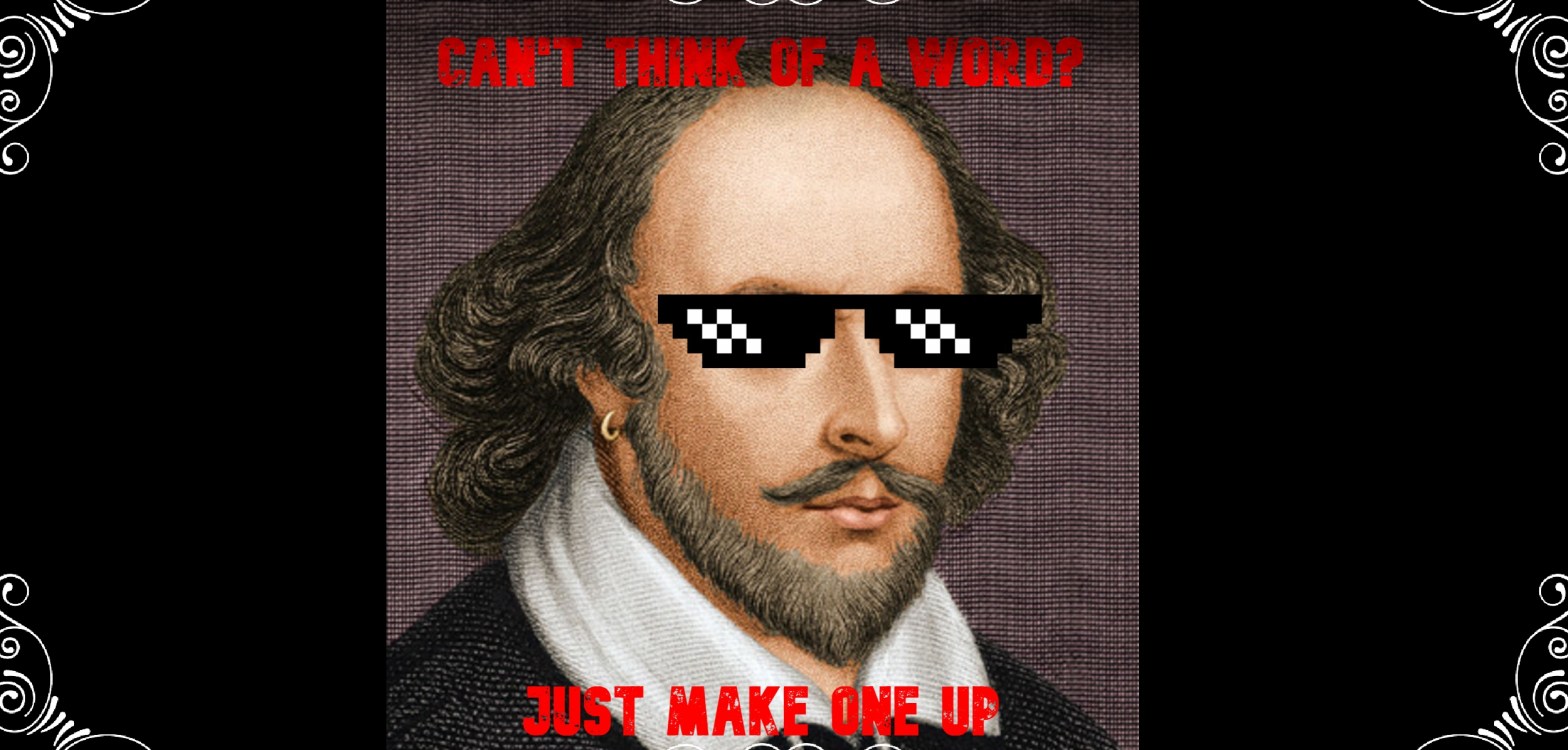
1. William Shakespeare

Hey, my number one pick is William Shakespeare, the most famous content creator in the Elizabethan era. That is, Elizabeth the first-ethan era. We just ended the Elizabeth the second-ethan era. What an era that was. Phew! Glad it’s over. 

Anyway, William was married to Anne Hathaway, which is crazy, but as far as I know, Anne never used her husband’s connections to make it into the acting industry, so good for her! She made it on her own! A self-made woman.

Shakespeare created so much content, it’s really quite incredible. One thing he wrote was “To be, or not to be, that is the question.” To be honest, that is the question. That really is the fuckin question out here. Are you gonna be, or are you not gonna be? As for me, I’m tryna be. “To be or not to be?” is a question that a nation or a culture may face, or even the entirety of humanity. I imagine one of the major players in the Cuban Missile Crisis recalling the question. That really was the moment where humanity asked of itself, “to be or not to be?” 

Of course, it wasn’t really humanity that was asking that. It was just a few dozen American and Russian guys asking that question, and maybe a few Cubans. Everyone else was saying, “Uh yeah, ‘to be or not to be?’ interesting question, but there’s one obviously correct answer: to be! We all want to be! 

In some different ways, we’re asking that question again with climate change. It’s not the same, but we’re still asking that question. And it’s not just a few dozen American/Russian/Cuban guys, it’s a lot more than that. We’re all involved, we’re all trying to be.

High Movie Review #14: Rudolph the Red-Nosed Reindeer

Ho! Ho! Ho!

All right, let’s get to this Christmas movie. One of the most classic Christmas movies. It really established a certain style of Christmas imagery for movies and advertising. It was made by Rankin/Bass Productions and they made several other stop-motion Christmas TV specials. So that style has become associated with the experience of Christmas. You see it even today. There’s a recent commercial featuring Lebron James drinking Sprite, and he’s animated in a style similar to these old Rankin/Bass animations. Of course, it’s done on a computer to make it look like the old stop-motion movies, but I digress. I always digress.

Rudolph the Red-Nosed Reindeer is my favorite Christmas movie. Just wanted to get that outta the way. So the movie is sort of “hosted” or narrated by this gentleman snowman guy. He’s got a vest and a pocket watch and a little hat. He’s great. It’s always funny when snowmen are dressed with scarves and stuff, like they’re trying to keep warm. They’re made of snow! Burl Ives does the voice and he has such a unique warmth to his voice. A snowman with a warm voice? Now I’m temporally confused. Wait, temporally means having to do with time, not temperature. So what, I’m thermally confused?

So Rudolph is born and his dad is like “What the fuck! His nose is red! And it glows! Fuck! I’m ashamed of my own son!” They try to hide it and then Rudolph goes to reindeer kindergarten or reindeer school or whatever. Reindeergarten? They have this coach, which is funny, because he has a hat and whistle on, but he’s still a reindeer. I love those little human accessories on cartoon animals. And this girl reindeer thinks he’s cute, which excites him so much that he acquires the power of flight. But then his red nose gets exposed and everyone makes fun of him. Even Santa! Santa goes up to Rudolph’s dad, whose name is Donner by the way, and Santa’s like “You should be ashamed of yourself, man! Fuckin’ red-nosed kid!” Rudolph gets sad, obviously, but the girl reindeer still likes him.

It’s all pretty standard stuff, you know? Disaffected youth and all that. While this is all happening, we get a second storyline about the elves that work at Santa’s workshop. Now there’s some weird stuff that happens in this movie with regard to the voices. So there’s a head elf, and he has a bossy, booming, angry voice. But then it totally changes for just one clip. The elves are all about to sing for Santa Claus, and the head elf is counting in the music, saying “And a one-uh, and a two-uh…” in this squeaky, whiny, completely different voice for some reason. I guess he could be trying to sound nicer in front of Santa, but he doesn’t sound like the same person at all! Bizarre. 

The other weird thing is when Rudolph grows into a young adult reindeer. He runs into his old classmates [who were assholes to him back in Reindeergarten], and they all have New York accents for some reason. Maybe it’s customary to send reindeer to New York for boarding school.

Anyway, one of the elves doesn’t like making toys, so he becomes an outcast, creating a nice parallel of Rudolph’s own misfit-ness. Nice! They even sing the same misfit songr. The misfit elf, named Hermey, leaves to pursue a career in dentistry. He meets Rudolph and then they meet a silver-and-gold prospector named Yukon Cornelius. I love this guy. He’s so aggressively enthusiastic. The trio is floating on a small iceberg, and they crash into land, and Yukon just screams, “Laaaaaaaandddd HOOOOOO!!!” so loudly, and Hermey’s like, “yeah, no shit.” 

I used to be kinda creeped out by the island of misfit toys, but now I like it. The song is still kinda creepy, but it stands out from the rest. Then Aslan won’t let them stay there. 

Rudolph goes home to find his family gone, taken by the abominable snow monster, who sounds like that monster in the basement of Jabba the Hutt’s palace in Return of the Jedi. I love the scene where Hermey is oinking to draw out the monster. It’s such a pathetic little “Oink, oink!” I love it. Then Yukon just drops a fuckin boulder on him, then pushes him off a cliff. Get owned! 

But then they come back and everyone starts feeling bad for how shitty they were. Santa apologizes to Rudolph, and the head elf apologizes to Hermey, and the abominable snow monster apologizes by putting a star on top of the tree. And he tried to eat them! But they’re like, “No worries, man, it’s cool.”

Okay, now, there’s this current analysis or “take” on the movie that’s like this: Santa at the end is like “Hey Rudolph, your nose is bright and can help me get through the storm. Help me!” and then Rudolph is like “Nah. Y’all were assholes to me, and you’re only nice to me now that I’m useful for your personal gain. I don’t owe you anything,” and blah blah blah. Interesting take. But if you watch the movie, you’ll see that Santa was actually being nice to Rudolph before he came up with the idea of asking Rudolph to guide his sleigh tonight. He wasn’t just being nice to win over a favor. It’s almost like people don’t watch the fuckin movie. 

Then people say that Santa’s just using him for personal gain. What personal gain? Is he gonna get fired if he stays home? Who’s gonna fire him? 

Okay, but then you might say, “Okay, fine, it’s not personal gain, and Santa changed his mind before asking for help, but Rudolph is still not obligated to help Santa after the abuse.” Sure. Great point. He’s not obligated. A lot of movie characters aren’t obligated to do heroic things. 

How about this unnecessary thought process: “Hey Santa, you were pretty cruel to me when I was a child. That was bad. But now I can help you bring happiness to a billion children. I will do that, despite your previous actions against me.” Maybe that can be the story.