Top 10 Content Creators of All Time

10. Orson Welles

Orson Welles was born in Kenosha, Wisconsin. He began creating content early in life, doing magic shows and puppet performances. Eventually he stepped up his content game by doing some performances on the radio. He pretended, on the radio, that martians were invading the United States of America. So quirky! It was, of course, just a performance of a late 19th century novel, The War of the Worlds, but some people thought it was a real martian invasion. 

That reminds me, we haven’t had a good hoax like that in a while. Sure, there was that balloon boy, and that was kinda cool for content creation, but it would’ve been way cooler if it was just the balloon boy himself perpetrating the hoax. Instead it was just his weirdo parents, which is kinda lame. And then there was the so-called “Jetpack Man,” which is a good hoax in theory, but it was in 2020 when there was so much else going on, so the timing was bad. It’s hard to get noticed as a hoax content creator these days. 

Anyway, then Orson Welles received the greatest contract in Hollywood history despite never having directed a film. The man has good timing for content creation. So he made a thinly veiled retelling of the life of William Randolph Hearst, a content creator in his own right, telling lies in newspapers to start wars. Welles called the movie Citizen Kane, and it’s a masterpiece, if you ask my opinion about it. I thought it’d be a sappy little love story, because it’s so highly regarded, but it’s kind of a big “fuck you” to one of the richest man in the world, at the time, which is pretty cool. 

Then I started thinking, “Someone should do the same type of movie with one of these modern robber barons.” So then I started writing the screenplay, but then it became more of a crime comedy where a couple stoners kidnap the daughter of the world’s richest man. I’m still waiting on my Hollywood offer.

9. Arthur Guinness

Arthur Guinness was born in Celbridge, Ireland, and died in Dublin, Ireland. In between those events, he created some content in the form of beer. The beer was named Guinness, after the name of the content creator himself. And what great content it is! When I first got to Dublin [from the U.S.A.], the taxi driver from the airport just started talking about Guinness and how amazing it is. Then I went to a pub, they call it, and had a pint of Guinness, and it was phenomenal. “That’s some good content to consume, right there,” I said. It’s smooth as hell, and the hangovers are not too bad, in my experience. 

Beer in general is good content itself, you know? It’s nice to consume. But it’s also a content facilitator. It facilitates content creators in their content creation. Content like a guy jumping off the roof of a building, smashing a table with his body. That type of content is almost always fueled by some type of beer, possibly Guinness. My roommates and I once created some beer-facilitated content, when we took our old, broken TV, threw it off the roof, then threw bricks on it. Some of the best content I’ve created, I’d say.

The reason Arthur is not higher on this list is that, when I drink a pint of Guinness, I really want a second pint. And when I drink a second pint, I really really want a third pint. And then it just compounds, and the world gets blurry, but there’s a live band, so that’s cool. Then you really really really want another pint, and there’s a nice, funny, pretty, cute girl drinking with you. And she’s laughing and touching your arm, and your hands and leaning on your shoulder. And she’s walking with you, but you’re so disoriented from the Guinness, so all of a sudden you wake up in your hotel room, alone, having not made a move because you were so disoriented. And now you’ll probably never see her again. You blew it.

So that can happen with his content, so watch out for that. But then you want some more Guinness the next day, just one more won’t hurt.

8. Tony Hawk

Anthony Hawk goes by the name Tony Hawk, as we all know. He started creating content in the early 1980s. What he would do, see, is ride around on a piece of wood with wheels attached. He’d perform all these crazy tricks with the board, jumping and flipping around. It was insane, and people loved it cause no one had seen content creation quite like that.

He really made it big when he created some content called Tony Hawk’s Pro Skater in 1999. And I went to my cousins’ house, and they turned on the Playstation, and I played that game, and it was the coolest thing I had ever experienced at the time. It makes me think about this question: “What are the best things I’ve experienced, progressively, over the course of my life?” I would say it probably starts with candy. When I was a toddler, candy was the best thing I’d ever experienced. Then Tony Hawk’s Pro Skater surpassed it. After that, maybe it was the Jimmy Neutron/Fairly Oddparents crossover. That was amazing. That held the top spot for a few years until I had my first kiss. That was awesome. And then, you know, other things surpassed that.

Anyway, Tony Hawk continued creating incredible content, such as Tony Hawk’s Pro Skater 2, Tony Hawk’s Pro Skater 3, and Tony Hawk’s Pro Skater 4. Great stuff. The type of thing you can just pick up and play and have a great time immediately. I loved the secret characters like Spider-Man, Iron Man, and Shrek. 

His recent content is good too, telling stories about him being halfway recognizable. We all know Tony Hawk, but I guess it’s difficult to believe that it’s actually him when you meet him. He just seems like a cool guy, that’s the main thing about him.

7. Rihanna

Robyn Rihanna Fenty was born in 1988 in Barbados, which is pretty cool. She started creating content in 2011, releasing a fragrance, Reb’l Fleur. I’ve never smelled it, but I’ve heard it’s some good content. Her next fragrance-related content was called Rebelle, and she made a commercial for it, which was even more Rihanna content than I could hope for. She just kept on going, never stopping her content creation, with the release of her third fragrance, Nude. That’s definitely what I’m talking about when I type “Rihanna nude” into the google search bar.

Never seeming to take any pause from creating content, she started creating content of the cosmetic variety, Fenty Beauty. This is when she hit the big time, in my opinion. The makeup is really good, and it works well with so many different skin tones, which is amazing. Inclusivity is the way to go. 

I should mention some other content she’s created, such as a fashion company, a lingerie company, and a skincare company. Pretty great stuff.

6. Salvador Dali

Salvador Dali was a content creator from Spain, which is also called España by people from España. Not sure why we don’t just say it the same way that the people from the country say it, but whatever. That’s a question for a linguist [I’m not a linguist]. I mean, if I met a guy named Alejandro from España, it’s not like I’d say, “Oh, yeah, well,  I’m just gonna call you ‘Alexander’ cause that’s what we do here in the U.S. of A.”

Salvador Dali painted things. And he painted things that weren’t things. And he painted things that were almost things but not quite the thing. You may know his painting, The Persistence of Memory, which featured a few melting clocks. That’s my favorite painting of all time. I want to go see it in person one day so I can throw a bowl of soup at it. That’s one of my bucket list items. 

You might not remember his lesser-known content, such as his painting, The Great Masturbator, which is what they used to call me back in the day. I was a great masturbator. One of the greatest, in fact. 

5. Stevie Wonder

Stevie Wonder is a content creator from Michigan. He started singing songs for Motown Records in the 1960’s C.E. Back then, the music industry had a pretty rigid structure to it. The songwriter wrote the song, the singer sang, the producer produced, the sound engineer engineered sound, and the pianist piano-ed. Everyone had their specific role. It was a division of labor. The Motown bass player was named James Jamerson, which kinda sounds like someone forgot the name, so they just made it up on the spot. But he was a great bassist and deserves more recognition.

Anyway, as time went on, musicians were given more autonomy over how their songs and albums were made. And he made some absolutely [positively] amazing songs. I mean, I’m listening to Sir Duke right now as I’m typing this. Goodness gracious, it’s fucking good. Obviously this list is kind of a tongue-in-cheek situation, but that song is genuinely just so classic. It’s the type of song you’d show to aliens if they asked us what Earth music was like. 

Also Uptight (Everything’s All Right) is really, really good. If you’re looking to get into Stevie Wonder, listen to those two songs first. That oughta wet your appetite, which is an odd phrase. Also there’s “wet your whistle,” which sounds like some kind of weird, horny euphemism. Hold on, I just looked it up. Apparently it’s “whet your appetite,” what the fuck?

4. Shigeru Miyamoto

Shigeru Miyamoto is a Japanese guy that makes video games. The first content that he created was called Donkey Kong, and it featured a gorilla throwing barrels at a man who’s trying to climb a bunch of ladders. Quite hilarious. Later he created some content called Super Mario 64, which featured Mario jumping around a castle, among other things. I’ve enjoyed playing that game  since I was a kid. Back then, rumors circulated that Mario’s brother Luigi was hidden somewhere in the game. People believed that, if you collect every coin in the game, Luigi would appear. Or if you performed some crazy feat near the castle’s courtyard fountain, Luigi would appear. But Luigi never appeared. Mario was all alone.

But it was fun to engage in these rumors, and it’s fun to look back upon them. It’s something that we’ve mostly lost in the internet age. There are fewer fun/mysterious myths like that. Obviously there are still conspiracy theories, but I’m talking about these word-of-mouth legends. Now you can just look up on the internet that Luigi’s not in Super Mario 64, and it’s over. There were other rumors like that. Something about Marilyn Manson’s anatomy that we all heard about…

Of course, I think it’s good that I have such easy access to such an incredible amount of knowledge. It’s good to know things and to learn things. One of the tragedies of the internet is that it did not become an unlimited source of knowledge, but an unlimited source of information, true and otherwise.

3. Riley Reid

 Speaking of the internet, Riley Reid has been creating content for over twelve years now, and I really love her content. It’s some of the best content out there. But the reason she’s not higher on this list is that a very strange thing happens when I consume her content: I’m enjoying her content, having the time of my life, then all of a sudden I’m totally repulsed by her content. I just get immediately disgusted, to the point where I quickly turn it off, and I can’t even imagine why anyone would like that type of content. Really bizarre experience, and it doesn’t happen with any of these other content creators.

It’s not like, when I’m playing Super Mario World, that I experience a particularly euphoric moment of enjoyment of the game, followed by a sudden sense of revulsion at the very sight of the Italian plumber, such that I delete the memory save file of the game and yank the power cord from the SNES console.

2. Ludwig van Beethoven

I love this guy. One of the greatest content creators to come out of Germany. He lived in Austria as well. In the late 18th century and early 19th century, Germany and Austria were known for producing great content creators, and Beethoven was the best of the best, in my opinion.

He wrote the theme song to the Judge Judy show, and that’s pretty cool. It’s a pretty cool theme song. That show’s kinda fuckin whack, though, if you ask me. One of the highest-paid people on television judging a $500 rent dispute. Girl, just be a homie and help them out. Plus she was a complete bitch all the time. I guess if she wasn’t, she wouldn’t be one of the highest-paid people on television. But it speaks to a larger point which is that I don’t understand why people like assholes on reality TV shows. Judge Judy, Gordon Ramsey, and to a lesser extent Simon Cowell, I just don’t get it. Gordon Ramsey can go take a flying fuck at the moon, as far as I’m concerned. It probably all started with Morton Downey Jr., an asshole/daytime TV show host. Hey, it says here on Downey’s Wikipedia page that Morton Koopa Jr. [content created by Miyamoto], was named after Downey. And Ludwig von Koopa was named after Beethoven! Look how connected everything is!

Anyway, ol’ Beethoven created some content called “Fur Elise,” after his friend asked him what he wanted for Christmas. It can get pretty cold in Vienna in the winter, but Elise never gave him the fur. Poor chap.

His greatest content is called “Ode to Joy.” I’m a big fan of joy myself. It feels pretty good, and it’s about time someone created an ode to it.

1. William Shakespeare

Hey, my number one pick is William Shakespeare, the most famous content creator in the Elizabethan era. That is, Elizabeth the first-ethan era. We just ended the Elizabeth the second-ethan era. What an era that was. Phew! Glad it’s over. 

Anyway, William was married to Anne Hathaway, which is crazy, but as far as I know, Anne never used her husband’s connections to make it into the acting industry, so good for her! She made it on her own! A self-made woman.

Shakespeare created so much content, it’s really quite incredible. One thing he wrote was “To be, or not to be, that is the question.” To be honest, that is the question. That really is the fuckin question out here. Are you gonna be, or are you not gonna be? As for me, I’m tryna be. “To be or not to be?” is a question that a nation or a culture may face, or even the entirety of humanity. I imagine one of the major players in the Cuban Missile Crisis recalling the question. That really was the moment where humanity asked of itself, “to be or not to be?” 

Of course, it wasn’t really humanity that was asking that. It was just a few dozen American and Russian guys asking that question, and maybe a few Cubans. Everyone else was saying, “Uh yeah, ‘to be or not to be?’ interesting question, but there’s one obviously correct answer: to be! We all want to be! 

In some different ways, we’re asking that question again with climate change. It’s not the same, but we’re still asking that question. And it’s not just a few dozen American/Russian/Cuban guys, it’s a lot more than that. We’re all involved, we’re all trying to be.
High Movie Review #14: Rudolph the Red-Nosed Reindeer

Ho! Ho! Ho!

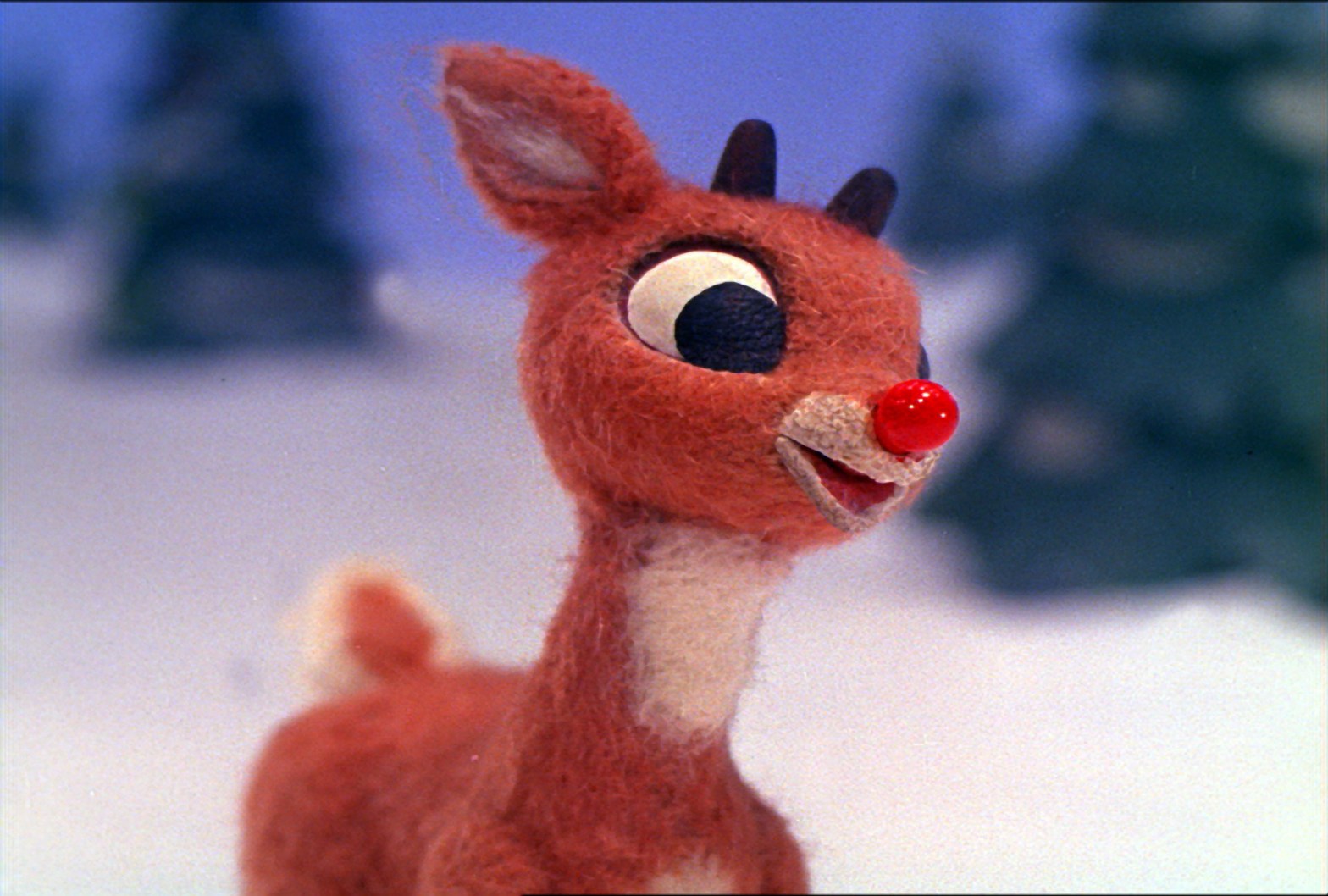
All right, let’s get to this Christmas movie. One of the most classic Christmas movies. It really established a certain style of Christmas imagery for movies and advertising. It was made by Rankin/Bass Productions and they made several other stop-motion Christmas TV specials. So that style has become associated with the experience of Christmas. You see it even today. There’s a recent commercial featuring Lebron James drinking Sprite, and he’s animated in a style similar to these old Rankin/Bass animations. Of course, it’s done on a computer to make it look like the old stop-motion movies, but I digress. I always digress.

Rudolph the Red-Nosed Reindeer is my favorite Christmas movie. Just wanted to get that outta the way. So the movie is sort of “hosted” or narrated by this gentleman snowman guy. He’s got a vest and a pocket watch and a little hat. He’s great. It’s always funny when snowmen are dressed with scarves and stuff, like they’re trying to keep warm. They’re made of snow! Burl Ives does the voice and he has such a unique warmth to his voice. A snowman with a warm voice? Now I’m temporally confused. Wait, temporally means having to do with time, not temperature. So what, I’m thermally confused?

So Rudolph is born and his dad is like “What the fuck! His nose is red! And it glows! Fuck! I’m ashamed of my own son!” They try to hide it and then Rudolph goes to reindeer kindergarten or reindeer school or whatever. Reindeergarten? They have this coach, which is funny, because he has a hat and whistle on, but he’s still a reindeer. I love those little human accessories on cartoon animals. And this girl reindeer thinks he’s cute, which excites him so much that he acquires the power of flight. But then his red nose gets exposed and everyone makes fun of him. Even Santa! Santa goes up to Rudolph’s dad, whose name is Donner by the way, and Santa’s like “You should be ashamed of yourself, man! Fuckin’ red-nosed kid!” Rudolph gets sad, obviously, but the girl reindeer still likes him.

It’s all pretty standard stuff, you know? Disaffected youth and all that. While this is all happening, we get a second storyline about the elves that work at Santa’s workshop. Now there’s some weird stuff that happens in this movie with regard to the voices. So there’s a head elf, and he has a bossy, booming, angry voice. But then it totally changes for just one clip. The elves are all about to sing for Santa Claus, and the head elf is counting in the music, saying “And a one-uh, and a two-uh…” in this squeaky, whiny, completely different voice for some reason. I guess he could be trying to sound nicer in front of Santa, but he doesn’t sound like the same person at all! Bizarre. 

The other weird thing is when Rudolph grows into a young adult reindeer. He runs into his old classmates [who were assholes to him back in Reindeergarten], and they all have New York accents for some reason. Maybe it’s customary to send reindeer to New York for boarding school.

Anyway, one of the elves doesn’t like making toys, so he becomes an outcast, creating a nice parallel of Rudolph’s own misfit-ness. Nice! They even sing the same misfit songr. The misfit elf, named Hermey, leaves to pursue a career in dentistry. He meets Rudolph and then they meet a silver-and-gold prospector named Yukon Cornelius. I love this guy. He’s so aggressively enthusiastic. The trio is floating on a small iceberg, and they crash into land, and Yukon just screams, “Laaaaaaaandddd HOOOOOO!!!” so loudly, and Hermey’s like, “yeah, no shit.” 

I used to be kinda creeped out by the island of misfit toys, but now I like it. The song is still kinda creepy, but it stands out from the rest. Then Aslan won’t let them stay there. 

Rudolph goes home to find his family gone, taken by the abominable snow monster, who sounds like that monster in the basement of Jabba the Hutt’s palace in Return of the Jedi. I love the scene where Hermey is oinking to draw out the monster. It’s such a pathetic little “Oink, oink!” I love it. Then Yukon just drops a fuckin boulder on him, then pushes him off a cliff. Get owned! 

But then they come back and everyone starts feeling bad for how shitty they were. Santa apologizes to Rudolph, and the head elf apologizes to Hermey, and the abominable snow monster apologizes by putting a star on top of the tree. And he tried to eat them! But they’re like, “No worries, man, it’s cool.”

Okay, now, there’s this current analysis or “take” on the movie that’s like this: Santa at the end is like “Hey Rudolph, your nose is bright and can help me get through the storm. Help me!” and then Rudolph is like “Nah. Y’all were assholes to me, and you’re only nice to me now that I’m useful for your personal gain. I don’t owe you anything,” and blah blah blah. Interesting take. But if you watch the movie, you’ll see that Santa was actually being nice to Rudolph before he came up with the idea of asking Rudolph to guide his sleigh tonight. He wasn’t just being nice to win over a favor. It’s almost like people don’t watch the fuckin movie. 

Then people say that Santa’s just using him for personal gain. What personal gain? Is he gonna get fired if he stays home? Who’s gonna fire him? 

Okay, but then you might say, “Okay, fine, it’s not personal gain, and Santa changed his mind before asking for help, but Rudolph is still not obligated to help Santa after the abuse.” Sure. Great point. He’s not obligated. A lot of movie characters aren’t obligated to do heroic things. 

How about this unnecessary thought process: “Hey Santa, you were pretty cruel to me when I was a child. That was bad. But now I can help you bring happiness to a billion children. I will do that, despite your previous actions against me.” Maybe that can be the story.

The Worst Essay I’ve Ever Written

Okay, I think I just wrote the worst essay I’ve ever written. In my entire life. And I think it will remain as the worst essay that I will write in my entire life. I was born [at some point in the 1900s], and I will die [sometime in the 2000s], and within that time, the worst essay I will have written was written in December of 2022. It was so bad, honestly. The worst.

So let’s get a bit of background here. During some year in the 1900s, I was born. And that was all fine and good. Then eventually I worked at an insurance company [I won’t say which (there was a gecko involved)], and I didn’t really like it. I didn’t like my life. So my plan was to transfer to a branch in another city, and then somehow get a new job for some environmental company [I was becoming an environmentalist]. As I was preparing for the move, a public health crisis broke out. I started working from home, which was okay, but I started to really really hate that job. So I quit, and I went back to school to study environmental science. 

It’s interesting, and I hope to do some good in the world. But you gotta take some general education courses in order to get your degree. I took one course that fulfilled two different requirements at once. Smart! The class was called “Understanding Evil” and it was a philosophy/religion type of class, which is fine, but it was fuckin horrible. I honestly want to just make an account on ratemyprofessor.com just to give this guy the lowest amount of stars possible. Zero, probably. Or maybe one. Or maybe it doesn’t even use a star rating system. But he fuckin sucked. What a complete asshole. He sucks!

Anyway, I had one final essay due, and I was kinda getting ready to write it, but I was also kinda starting to drink. Just a few drinks, I thought, but then all of a sudden I was in the eleven o’clock hour, my vision was a little bit blurred, and I was angry. The essay was due at 11:59 PM, so I typed furiously, like what I’m doing now, as if there were some deadline for this blog post. There isn’t. I could literally never write another word ever again if I wanted to. But I won’t do that!

And who the hell knows what I was even talking about in that essay?!? Something about the difference between evilness and badness. I was just writing random shit. I think I even mentioned Rocky at some point. As in Rocky Balboa. The boxer. The Italian Stallion, if you will. I was just throwing figurative shit at the figurative wall. I don’t know if anything even stuck. And even if it did, it’s still shit.

Then it was 11:56, and I was doing the works cited page. Of course this professor is one of those that DEMANDS, under penalty of death, that you use the Chicago style of citation. NOTHING ELSE WILL BE ACCEPTED. Is this really what we want in our world? Do we need to be that serious about the citation style? I accept that it’s good to cite your sources and not plagiarize and all that, but does it make the essay bad if I use MLA instead of Chicago style? No. It was bad because I was drinking and writing it in the last hour and I didn’t give a shit about the class. Just imagine a scientist peer reviewing another scientist’s paper and they’re like, “Yeah, great paper, intriguing stuff, well-done research, but it was in MLA, so we should throw it out.”

I submitted the worst essay of my life at 11:58, and I’m glad to be done with it. I’m ready to move forward with my life, you know? The bigger point is that hyperfocusing on technicalities, like citation style or font or margins, is basically worthless. It’s not important in gauging intelligence. It’s like Jeopardy. I love Jeopardy, I watch it all the time, but this whole “answer must come in the form of a question” thing is kinda ridiculous. The point is to test the player’s knowledge and their abilities to quickly solve clever clues. This added rule accomplishes nothing. The ability to answer the clue should be everything. Here’s a clue from the category “9-Letter “F” Words”: This nine letter word describes Jeopardy’s question rule. What is frivolous?

Some Sentences and Phrases that Need Context

Language is one of the most incredible tools that humanity has. I love it. I only know one language, English [obviously], and I know that English gets a bad rap for not making sense, having strange spellings and contradictions, but I love it. I do. Human beings have contradictions!

Anyway, whatever language you speak, the purpose of language is to communicate with one another. You have a thought, you want to share that thought with another person, so you make a series of noises or write a series of characters on a paper or a screen, and there you go! You’ve shared part of your mind with someone else! It’s really quite beautiful. Or, it can be beautiful. Some thoughts are clearer than others. And some people are better at using language in certain situations than others. It’s a tool, after all. The goal should be to express clearly, but some people do sneaky little tricks with language.

People lie, of course, but that’s just knowingly saying something that’s false. Other tricks are much more sneaky, and since I want language to be used well, I wanna talk about some of these tricks. Some sentences are used to express a thought, but their full meaning is dependent on the context. Let’s just get into some examples and I’ll explain. 

Climate has always changed, and it always will

This is a really common example of a sentence that really needs context to derive its meaning. Anthropogenic climate change is one of the biggest issues of our time, so people talk about it. This sentence is true. It is an accurate statement. Now let’s take a look at that phrase being said in different contexts. 

Let’s say I was a university professor, teaching Environmental Science 101, and after I first explained the difference between climate and weather, I said, “The climate has always changed, and it always will.” Then I go on to explain the climate over millions of years, and how it works, and how anthropogenic greenhouse gases change the climate, and so on. In that context, the meaning of the phrase is: “Hey, the Earth is really, really old. And the climate [temperature, precipitation, oceans, atmospheric content, etc.] has changed a lot and fluctuated a lot in that time. Currently, a big part of the change is due to human activity. But not all of the change is due to human activity. Also, because we have some understanding of previous climate change, we may better understand the current climate change,” and so on. 

The purpose of the sentence is to educate, to explain, and to explore how our world works.

Now let’s say I’m watching a YouTube video about climate change, how dangerous it is, how we need to reduce our greenhouse gas emissions soon to mitigate the damage, and here’s how we can do that, etc. Let’s say I make a comment that says, “The climate has always changed, and it always will,” and nothing else. It’s the same sentence, and it’s technically correct, but its context gives it a different overall meaning. In this context the sentence seeks to un-explain, to obscure, and to limit understanding of the world. 

I mean, why would someone make this comments? It adds nothing. The fact that the climate has always changed is not in dispute. No environmentalist claims that the climate stayed the same for 4 billion years, then just in the last 100 years, it started warming up. The context, a video advocating environmental action, gives the sentence a different meaning. The meaning is: “Hey, this video wants us to change society to address climate change, but the climate has always changed, so we don’t need to do anything!” Totally different meaning, but it’s the same sentence. It’s a sneaky little trick.

Everybody makes mistakes

Another perfectly true statement. Yes, everybody does make mistakes from time to time. I’ve yet to meet someone who’s never made a mistake. But the mistake in question, and the context in which the statement is said, really matter here. “What’s the mistake?” is an important question. 

Like I got a new job, and I like it, but it’s kinda difficult sometimes. We’re building a lot of stuff, and I’m getting better at it, but sometimes I still mess something up. I’m tempted to just think that I’m a stupid idiot and horrible at my job, and I’m a worthless person, but then I say, “Hey, everybody makes mistakes,” and I continue on. It’s just a little mistake at work. Nobody died, I didn’t bankrupt the company or lose millions of dollars. I just did something slightly wrong, that’s all. So in that context it means “Hey man, don’t beat yourself up, you’re good.” 

But let’s say you commit some horrible misconduct in your workplace, like assault or something. And your boss is firing you, and you’re like, “Hey, everybody makes mistakes.” In that case your boss might think, “Sure, everybody makes mistakes, I’m not denying that. But your actions warrant a termination from your position, and the fact that everybody makes mistakes doesn’t really apply here.” 

It’s a useful phrase, but only sometimes.

“Disagree”

This is a word I hear from “all sides” [another phrase that gets used too much]. The right says “everybody I disagree with is a communist,” and the left says “everyone I disagree with is a racist.” I encourage everyone to resist using these phrases and to ignore anyone using them because they don’t add anything of value to political discussions. It can be funny, sure, but it does nothing. It’s not provable or disprovable, it just makes you feel good when you say it about the other guy.

It’s similar to the previous one, where you’d want to ask, “What are the mistakes?” With the whole disagreement thing, you immediately should ask, “What is the disagreement about?” You could say, “Ah, college kids get all up in arms about anyone they disagree with.” And yeah, sometimes they get pretty passionate about stuff, but sometimes they’re disagreeing with, you know, Richard Spencer, who deserves to be disagreed with, to say the absolute least. To simplify it as “disagreeing” diminishes the seriousness of the situation, and it allows the people with the most extreme, vile ideologies to use the same excuse. Everyone you disagree with blah blah blah.

There is no ethical consumption under capitalism

I agree with this statement, but I understand that it’s not nearly as universally accepted as the first two. But there definitely are different contexts in which to say this. One is as a provocative little slogan that you say when you’re trying to get someone to think about why capitalism is bad maybe. You say it, then you explain why you believe that, and then you have a nice little discussion, a polite back-and-forth on political thought, hopefully.

That’s fine, then maybe another context could be a discussion about the environment. And one guy’s going off about all the different things you’re supposed to buy and do to be a perfect environmentalist consumer, and he’s getting all mad whenever anyone does something that’s environmentally damaging. And you’re like, “Yeah, I get it. And I have a gas-powered car. And although I am generally opposed to fossil fuels, I need my car to get to work, and I can’t afford an electric one, and there isn’t sufficient public transport in my city. So I’m gonna keep driving my car. I’d like to be more eco-friendly, but there is no ethical consumption under capitalism.” In that context the meaning is basically, “Hey, get off my back. Our society makes perfect consumption impossible.” And then hopefully you work together to try to change society.

Lastly, there could be someone abusing this phrase. They say, “Look, since there’s no ethical consumption under capitalism, I might as well consume as immorally as possible for my own benefit. Might as well not give a shit.” And then they buy the most unnecessary, environmentally destructive things in the world. They just use that phrase as a poor excuse to act shittier than they need to. And that, in my opinion, is bad.

It’s one of those gray area things where it’s hard to know when you cross the line from reasonable to unreasonable. Such is life, as they say.

The Metric System and Other Units and Words

What they won’t tell you about the metric system is how un-poetic it really is. Let’s say I was out there crafting a poem about an arduous journey through a desert. If I wrote something about seeing “nothing but sand for miles and miles,” it would sound pretty good. Now if I were to say that I saw “nothing but sand for kilometers and kilometers,” it would sound horrible, and I’d have no hope of making it as a poet in this cruel world. 

I recently read some poetry from a man by the name of Pat Ingoldsby. Pat hails from the Republic of Ireland, where they use the easily digestible metric system. However, even a metric man understands the poetic value of a non-metric unit. He wrote about people “inching forward. To inch forward, or inch along, as a phrase, puts a nice image in your mind. An image of tediousness. No one centimeters forward. That sounds ludicrously scientific. 

Sometimes even wackier units create an ever-more-impactful poetic statement. Take fathoms, for example. I can’t understand what a fathom is, but if I read about a “beast lurking a thousand fathoms beneath the surface,” it wouldn’t matter how deep that actually is because I’m scared of this ominous creature now. Or leagues, 20,000 Leagues Under the Sea sounds quite adventurous if you ask my opinion on the matter.

But even I have my limits. These units sound nice, but I don’t want our society based on leagues or fathoms or even miles. The metric system is better, but I like that these other units have existed, from a literary perspective. Some units get my blood boiling. There’s tons and tonnes and short tons and long tons and metric tons. What on Earth is that all about? 

What really annoys me are nautical miles. Boy, do I hate those. My nation uses miles, and I can’t change that, but nautical miles? What next, nautical gallons? Nautical hours? 

I think my problem is that I strongly dislike all nautical terminology, not just their special miles. Oh there’s damage on the side of the ship! What side? Starboard! Really? Starboard? Star board? Can we not just say “left?” Left is a great word, believe me. 

Yet, in a cruel twist of irony, I must admit that starboard is a more poetic piece of terminology than left. Let’s say I was out and about, working on a poem about an old pirate ship battle. If I wrote down something like, “Explosions ripped the starboard wood,” it would probably sound better than me saying, “Explosions ripped the left side of the boat.” Maybe starboard isn’t so bad after all…

Do You Deserve Love?

When I was a teenager, in high school, there was a popular expression that was shared online, or written in notebooks, or said aloud. It was a saying that was said. The saying went like this: “If you can’t handle me at my worst, you don’t deserve me at my best.” Only girls and young women were saying this saying. I’ve never heard a boy or man say it, and I think it’s safe to say that it was only girls who used this phrase. I was just a simple teenage boy, starting to like girls more seriously, dating, wanting to date sometimes but getting rejected, breaking up, and all that. You know, typical high school stuff. 

Throughout all that, I kept seeing this phrase again and again, and I found it quite odd, even back then. What does it mean? Since it was always posted by girls, I assumed it was directed at boys and men, and I was a boy. I’m supposed to “handle” the girl at her worst, and if I’m unable to do that, then I don’t deserve her at her best. Okay. Why is this stipulation even being made? What is her “worst?” Maybe I don’t want to handle her at her worst, if her worst is particularly bad. There were always unstated assumptions that the “best” was worth the “worst,” and that the other party wants to engage in this worst/best arrangement. They might not even want to, let alone “can’t” and “deserve.” 

It’s kind of a reverse-deserving situation, if you overthink about it [which I do]. Like, because your best is supposedly so amazing, you deserve to have someone handle your worst. It always seemed like a slight justification for shitty behavior, though I don’t know if it actually manifested into any actual extra-shitty behavior. The best justifies the worst type of thing.

As I got a bit older, the phrase fell out of fashion. It even became popular to make fun of it in memes. If you can’t handle me at my X, then you don’t deserve me at my Y. Insert words or pictures for X and Y, and you’ve got yourself a meme. 

But people still talked about “deserving” in a romantic sense. “You deserve better,” “You deserve someone who treats you right,” “You deserve someone who appreciates you,” “You deserve someone who treats you as a priority,” “You deserve love,” and so on. Young women say these things to each other a lot, but friends have also said these things to me. And my question is: why would those things be true? Why do I deserve love? What about me makes me deserving of love?

I mean, I’m a decent person, I try to do the right thing, I try to treat people right, I make people laugh a lot, and I do interesting things. That’s fine, but why would I then deserve love? Sure, it would be nice if I met someone, fell in love with them, and they loved me back. That would be awesome, but I’m still very hesitant to say that I deserve love. Being a decent person doesn’t mean you deserve love. Being a decent person just means you’re a decent person. 

Now, some people who say these things are just being nice, just being encouraging. But some really do believe it. They believe that everyone deserves love, and when someone doesn’t find love, it’s a tragedy. But this deserving is always a general deserving and not a specific deserving. You deserve to be loved by someone, but you don’t deserve love from any given person. In fact, people are often repulsed by the idea of deserving a specific person’s love. Just because you love someone doesn’t mean you’re entitled to them loving you back. You don’t deserve their love because of your love. 

I like to think of it as a quantum mechanical wave function collapse, which I don’t fully understand. I’ll briefly explain. A particle doesn’t behave like a small version of the things we can see and touch, like a marble. It behaves quite differently. We can see a marble’s position as it moves around. But with particles, there’s not a obviously defined position of the particle. It’s more like a “cloud” of probability of where the particle is. At a specific time, when an “observation” occurs, the cloud collapses to a single point, and that’s the particle’s location. I think of love in a similar way. We each have a cloud of love-deserving. Some parts of the cloud mean that we find love, and other parts of the cloud, we don’t. You have this cloud of love-deserving, but when an individual comes into your life, the cloud collapses into a single point, and that point’s position indicates whether they love you or not. Make sense?

In this way of thinking, you both deserve and don’t deserve love. The problem, then, is this: even if you deserve love, in general, it doesn’t mean anything if no one actually loves you. You may have this cloud of love-deserving-probability, but if it always collapses to the area where the person doesn’t love you back, then it doesn’t matter that you have the cloud at all. If time and time again, you never find love, then there’s no point in being deserving of love. It’s just an empty promise.

So my real thoughts are this: the idea that you or I or anyone deserves love is not a worthwhile idea. And perhaps “deserving” is not something you can achieve, but it is something you can lose. You can’t positively deserve someone’s love, but you can definitely not deserve their love by mistreatment and abuse.

Some Quick Thoughts on Anarchism and Chaos

I’ve been reading this book called The Social Instinct by Nichola Raihani, a psychologist who researches the evolution of cooperation of various species. That’s what the book is about, cooperation. Cooperation between members of a given species, cooperation between different species, the evolutionary source of cooperation, and comparing human cooperation to that of other species. It’s quite fascinating and well-written. I highly recommend it. It’s not too science-y, but she still gives a lot of interesting information.

Before I get to my main point, I want to just share a quick example from the book. She talks about the different social tendencies between chimpanzees and humans. Chimps don’t compare themselves to other chimps. They don’t really care if another chimp has more stuff than they do. Humans, on the other hand, do compare ourselves with each other, and we do care about someone having more stuff than us.

She mentioned a study wherein children sit opposite each other. There’s a contraption with candy in the middle [kids like candy]. One child can press a button to release the candy to the two kids, or another button where neither of the kids gets any candy. So you’d think the kid would always push the button to get candy. But here’s the thing: the contraption is designed to give the button-pusher a lot less candy than the other kid. Because of this inequity, a lot of kids opt for no candy at all. Kind of interesting.

Anyway, Nichola also wrote about the mutiny on the Bounty, to discuss rebellion and authority and such. The Bounty was an 18th century merchant ship, and there was a famous mutiny. She explained that mutiny was a common threat around this time. Most merchant ships were owned by rich guys, and rich guys didn’t usually want to sail the dangerous seas themselves, they just wanted to make more money. So they buy the ship and they hire the crew. But they didn’t want to hire a bunch of random sailors because they might be dishonest and steal and whatnot. So they hire a captain, whose monetary interests align with the rich guy, to have absolute power over the ship, maintain order, make sure the job is done and all that. But if the captain is an asshole, there’s the threat of mutiny. 

Okay, that all makes sense. Then she writes about pirates and how pirate ships are organized differently, and how the people cooperate differently. She writes, “for the most part, life was actually more peaceful and less anarchic than on the merchant ships.” She then describes how pirates often engaged in self-governance, direct democracy, common ownership of the ship. You know, things that anarchists advocate for. She describes pirates as less anarchic than merchant ships, then shows them to be more aligned with anarchist-ish things. 

She’s using the term “anarchic” to mean “chaotic” instead of “having to do with anarchy or anarchism.” That’s quite common, and that’s what I want to talk about. Some people use the words anarchy, anarchism, or anarchist to simply mean chaos. Even the Joker, in The Dark Knight, calls himself an agent of chaos before telling Harvey Dent to “introduce a little anarchy.”

Now I don’t call myself an anarchist, but I’ve listened to plenty of anarchists, I know a few anarchists, and I’ve read a bit of anarchist literature. None of them, at any point, have ever said, “Hey, you know what I want in society? Just a whole bunch of chaos. Let’s just make things more chaotic, that sounds like a good idea.” In fact, they usually want a more organized society. They usually want basic needs of the people in society to be met. The provision of basic needs to everyone is a chaos-reducing practice. They want to organize truly democratic institutions, they want to dismantle unjust hierarchies like racism. Racism can cause some chaos, among other things, wouldn’t you say? So maybe if we had less of it, we’d have less chaos. That would be cool, I think.

Anarchism is different things to different people, but it’s rarely just an advocation of chaos for no reason. Some anarchists have some cool slogans, too! One is that anarchism is “democracy taken seriously.” That’s kind of a cool one. It’s like, democracy’s cool, I like that. Taken seriously? That’s kind of an interesting thought, tell me more!

There’s another one which goes, “I am an Anarchist not because I believe Anarchism is the final goal, but because there is no such thing as a final goal.” Wow, that’s a cool quote. And it’s from a guy named Rudolf Rocker, which is a cool name. And I like that quote because it reflects my attitude about politics and society as well. The point of being a political person is not to hold the correct opinions on everything [though we should try our best], nor is it to “achieve” a certain type of society, wiping our hands like the job is complete. Society will change as long as it exists, and the goal is to make it better, not to just think correctly about it or achieve something and then walk away. And of course, we’re each guided by our -ism’s that we believe in.

So yeah, I like that quote.

Now you might think that anarchism is silly or unrealistic or whatever, but it would probably be best to understand what it is and what anarchists are actually saying. It’s not just a whole bunch of chaos flying around. My first introduction to an actual anarchist was a YouTube channel called Non-Compete, in his best video [in my opinion]: “Why are you working 8 hours per day?” It’s a fantastic introductory video to thinking about lefty thought. And hey, my name is Lefty! 

So check out some anarchists, listen to what they have to say. You don’t have to agree with them, I’m not pressuring you to agree, but it’s well worth it to at least understand them.

Oh! Another thing. There was that funny story about a guy who defaced his own property with “Biden 2020,” and then an anarchist symbol. That was so funny. It was a prime example of totally not understanding what anarchists actually believe. He just thought, “Hey, the far-right loves Trump, right? So that means that the far left loves Biden. Right?” No. Anarchists don’t love Biden.

Things Might Be Better, But They’re Still Bad [and that’s difficult to accept]

Sometimes people work really hard to improve themselves. It is difficult, and there are setbacks. Let’s take alcohol as an example. A person might drink to a point of drunkenness three times per week, on average. They might recognize this as unhealthy, and they might consider their hangovers to be preventing them from doing what they want to do in life. So they decide to reduce their drinking to only getting drunk once per month. They do pretty well for a while, but then a month comes along where they get drunk four times. They’re tempted to feel like a failure, that they haven’t made any progress at all. You might explain to them that they just had ten months in a row of moderate drinking, and even the bad month was not as bad as it used to be, but it’s hard for them to accept that, especially while they’re currently hungover. 

It’s a common experience for bad things to get better, but still be bad. Instead of feeling that it’s better, it’s common to feel that it’s just bad. It’s hard to recognize things as better when they’re still bad. 

I believe that this concept applies not just to individuals, but to socio-political issues and potential futures we might create or experience. That’s what I want to explore.

Let’s take gun control, for example. The citizens of the United States own a lot of guns. A lot of our fascination with, ownership of, and culture surrounding guns stems from a single sentence: A well regulated Militia, being necessary to the security of a free State, the right of the people to keep and bear Arms, shall not be infringed. That sentence was ratified as an amendment to the U.S. Constitution in 1791.  Different states have different laws concerning who can buy a gun, what they need to do in order to do that, the types of guns that are available, and what they’re allowed to do with that gun. In general, though, people are able to get guns in the United States. Currently, there are more civilian guns in the United States than there are civilians. 

Gun ownership and gun use is a constant socio-political debate within the United States. It is a continuous debate, but it usually spikes in intensity immediately after events such as Columbine or Virginia Tech or Geneva County or Fort Hood or Aurora or Sandy Hook or the Washington Navy Yard or San Bernardino or Charleston or Orlando or Las Vegas or Sutherland or Parkland or Santa Fe or Pittsburgh or Thousand Oaks or Virginia Beach or El Paso or Boulder or Buffalo or Uvalde. 

After these events, we discuss whether certain types of guns should be outlawed, whether background checks should be strengthened, whether age requirements should be raised, whether a “good guy” with a machine gun should be stationed at every school, every Walmart, every movie theatre, every place of business, every place in the entire state. The state would be completely patrolled by the police. What’s that called?

Anyway, I do think that a big overhaul of the gun situation in the U.S. could have a significant positive impact. Do I think that it will actually happen? No, but that speaks more to my lack of faith in the U.S. than my desire for things to get better. It could get better, but it probably won’t.

But let’s say it does get better. Let’s say we implement sweeping reforms, including more rigorous background checks, higher age requirements for certain guns, bans on the most deadly guns, better red flagging systems, and a massive gun buyback program, among other things, maybe. I think all of that would limit the access to guns for potentially violent people. It would delay the access to guns for some 18 year-olds, who, by the time they turn 25, may have changed their minds. Overall, a big program like this would reduce the amount of people dying in mass shooting events. 

However, because we have so many guns already, because we have a strong gun culture, because there still may be ways around these measures, we won’t be able to stop mass shootings completely anytime soon. But just like the alcohol example, I believe we can make things significantly better, but not perfect. Therein lies the problem. Let’s say that sweeping gun reform happens, and it reduces mass shooting deaths by 50% over the next ten years [compared to the number from the previous ten years]. That would be a great improvement, but it would be hard to feel that it’s an improvement, especially after mass shootings still occur. When a bunch of high school kids get killed in 2029, let’s say, it’s no comfort to say, “Well, it’s half as many high school kids killed in mass shootings in the 2020’s than it was in the 2010’s.” 

I think almost anyone, if they could reduce the amount of mass shooting deaths in the U.S.A., would do it, but it would still feel as though we just live in a society with mass shootings, plain and simple. People react to the news, not an academic sociology study that shows improvement over the course of a decade. It would be very easy for people to say, “Look, we had all these gun reforms, and we still have mass shootings! Let’s just undo all the reforms!” It’s a perfectionist, fallacious way of thinking, that we should throw away anything that improves society because it doesn’t work completely and perfectly to remove the problem. 

It’s concerning, but it seems more likely that we won’t get significant gun reform at all, and we’ll just live in a mass shooting society for the foreseeable future. 

I feel worried about a similar thing happening with climate change. Climate change is both slow and fast, which is bad. We won’t all boil to death tomorrow, but we also need to act quickly to avoid the worst case scenario of the next century and beyond. Some bad climate change effects are already happening, and human activity right now will create impacts in the future. Climate change, and its negative consequences, cannot be “stopped” completely. Bad things are going to happen. But we can still do a lot to make it not as bad. If we had some huge societal changes with transportation, electricity, agriculture, etc., that would have a positive impact [relative to doing nothing], but we would still have huge hurricanes, floods, droughts, and people dying in heat waves. It’s gonna happen. 

So I’m worried that people in 2035 will say, “Hey, we did all these changes to mitigate climate change, yet we still have people dying in hurricanes and heat waves. I guess it didn’t work, let’s just go back to a completely fossil fuel-run society!” Things are better than they could be, but they’re still bad.

Maybe it’s not the most worthwhile thing to worry about, since we need to get those huge societal changes to happen in the first place. Yeah, I’ll go worry about that now.

I guess the wider point is that I’m trying to be encouraging. It’s hard to improve things that are really bad in your life. It takes time. It’s easy to feel like there’s no progress, even though there is. Sometimes you gotta talk it out with someone, if you can, or write it out. Might help. And I’m here for you too.

Google is a poo poo head sometimes

I have a Google account. I use Gmail. I do a lot of my writing on Google Docs. It’s a great tool. Most of this blog is first written on a Google Doc. It’s easy. It’s simple. I’m checking my email anyway, so I start up some writing. I can bring up the same writing on my desktop and on my laptop. Awesome! It’s great, it works well.

But here’s the thing. Here’s the thing. The thing is that the Google account that I use for this blog is not my main, personal email account that I use or everything else. It’s just for this. And that’s fine. It works out well. I have my normal email logged in as default on my chrome browser. Then if I want to do some writing, I’ll log onto this email in an incognito tab. It works out very well, and I like it. So far so good.

The problem arises when I take my laptop to another location that has internet like, say, a library. A common place for people to go to use the internet. It’s a decent place for writing since you’ve got all these books around to inspire you, and there aren’t as many distractions as at home, like the TV and gaming console and all that neat stuff. So I go to the library, bring up my computer, type in my username, type in my password, hit the enter key, and Google tells me, “Verify it’s you.” Like, that’s what the fucking password was for! I gave you the password! It’s me. It’s literally me just sitting there, looking at a screen with an annoyed expression on my face. It’s me. Is it so shocking to Google that people bring their laptops to different places and use different sources of internet?

That first time, I just went home. I was pissed off. The next time I was planning to go to the library, I took a moment, at home, to log into my writing account. That way it’s already logged in by the time I get to the library. It worked fine. And since I worked on that account at the library, I thought that Google would “know” that my account and that wi-fi were friends. But no. It didn’t. I still had to do the same trick again.

Imagine this at any other time. Go back to the Prohibition era. You become friends with a guy who works at a speakeasy. He tells you, “Here’s the address, knock on the door, and say this password and we’ll you in.” So you go there, you knock on the door, you say the password, and the guy’s like, “Okay, now give me your telephone number, I need to call you to make sure it’s you. So go home and go to your telephone, and I’ll call you.” You’d tell him to go fuck himself.

That could be a good comedy skit.

Anyway, Google does this shit and I guess they want it to be extra, extra secure, but in practice it just makes it annoying for people. Why am I being subjected to this? And I get it, I’m using Google. It has great features. This shit just sucks ass, plain and simple. I wish I could just opt out and say, I’m fine with just having the password, I don’t have super secret stuff on there, it’s just an account I made for writing, I don’t need ultra maximum security where I can’t fucking log in.

The other thing is, I could just put in my personal phone number, and log on. I don’t really want my phone number attached to every fucking thing I do. Kind of a pointless thing, and it makes me feel like I’m being punished for doing nothing wrong.

I remember Apple, back in the day, would punish me for doing nothing wrong as well. The iPod was a pretty big deal, and you’d plug it into your computer to put songs on it. You could manage your iPod’s library and your computer’s iTunes library. But they had this thing where the iTunes account was only allowed to be “friends with” five iPod devices. Okay, but we’re a family! We have a family computer, as people did in the early-to-mid-2000’s. Maybe they still do, I don’t fucking know. But my dad was nice enough to buy an iPod for my mom, then he got one, then we all got one. But we were fucked cause we couldn’t use them all on the iTunes account. What a sick joke, and it’s the same thing, we were being punished for doing nothing wrong. We weren’t trying to steal or pirate anything. We were just trying to hang out and use iTunes. Sometimes these tech companies are assholes.

The Different Types of Exhaustion [in the opinion of this writer]

Isn’t it annoying when people write or talk like that? “It is the opinion of this reviewer that… blah blah blah.” Weird and professional-sounding third person bullshit. But it was cool when Walter Cronkite did it as he urged the U.S. government to end the Vietnam War. Kinda badass. So, in the opinion of this writer [me], there are a few different types of exhaustion that one can feel. They have different vibes, different severities, different timespans, and different solutions. So let’s talk about that.

The first is physical exhaustion. Classic. Depending on the circumstances, it might not even feel that bad. It can feel kind of satisfying, in a way. Maybe there’s a physical activity that you enjoy, like playing basketball. And maybe you played a bunch of basketball today, and now your arms, legs, and feet are sore. Your whole body is just sore and worn out. You’re exhausted, but after a shower and a drink, your exhaustion feels more satisfying as you reflect upon your great day. Unless you lost every game. Then you’re just pissed off.

So the satisfying version of physical exhaustion is very precarious. Doing something you enjoy, like basketball, is one way to make it more likely to be a good form of exhaustion. But even then, it doesn’t work forever. If you play basketball all day everyday, eventually the satisfied exhaustion runs out, and you just feel good-old-fashioned exhaustion of your physical body. You are spent. You need rest. So you rest. It’s all you can do. You need a day off, just to chill.

And there are other ways in which exhaustion can feel “good,” for lack of me thinking of a better word. Working out is a good type of exhaustion. It can help improve your sleep, which is a big reason why I’ve been working out more during the last few months. It works… okay for me. Also sex can lead to a fulfilling form of exhaustion, though that depends [for me] on the connection with the partner. If it’s only a physical connection, even if the sex is really good, I end up feeling more empty than fulfilled. But hey, we don’t need to talk any further about my sex life. 

Obviously there are times when physical exhaustion just plain sucks. Like driving for a long time. You ever drive for hours and hours? Your legs and eyes are sore, your whole body just feels bad, and you finally get to your hotel room and you’re just like, “I am DONE.” And you just collapse on the hotel bed. Also just work in general. That shit can have you physically exhausted at 5:30, unable to really enjoy yourself. I haven’t even worked serious, hard manual labor stuff. I’ve worked some jobs that were more physically intensive and it still was fucking draining sometimes. 

Okay, the next one is mental exhaustion. It’s when your brain don’t think so good. My brain can’t make the thoughts go! The thoughts ain’t movin’ proper! Make the brain thinking happen!

Anyway, mental exhaustion is quite common in different realms: school, work, creative endeavors, the socio-political state of the world, and the general experience of being alive. School, especially higher education, is  such an incredible catalyst for mental exhaustion. I love learning things, but the amount of work and the deadlines inherent to higher education can be very, very draining. Absorbing so much information, and more advanced information, on a short timescale is tough on your brain. It’s like traffic. The more things that are going, the less able they are to go, if you catch my meaning. Sometimes traffic slows to a complete stop! There is no more going! Nothing can go. I’ve definitely experienced that in my brain cells. None of them are going. It happens when you’re trying to cram for an exam [why don’t you examine my exam-crammin’?], and your brain is processing a ton of information, but eventually it grinds to a halt. At that point, even if you keep on studying, more information cannot be held by your brain in any meaningful way. You gotta just go to sleep. Maybe you can study in the morning, maybe not, but it’s pointless to continue. Just accept how it goes.

Hey! School isn’t the only thing that gets you mentally exhausted. There’s also the undefeated champion exhaustion, WORK. You gotta read emails, you gotta write emails, you gotta think of all the words to use to fit into the bullshit corporate language. Just staring at a computer screen all day, your brain gets fried. It’s hard to get your brain to do stuff afterwards. I don’t want to even think about work right now, even though my current job isn’t that bad. 

I’ll just talk about one more source of mental exhaustion before I, myself, get mentally exhausted. I also get mentally exhausted from creative endeavors. Been writing a lot, trying to write an effing book, and sometimes my brain is all tuckered out, and the words don’t form. It’s not quite the same experience as writer’s block, but the effect is similar: the words don’t go. Writer’s block is when you have a lot of motivation to write, you sit down, but the ideas are just shitty, or the sentences aren’t forming quite right, whereas mental exhaustion is when you can’t even attempt it.

OKAY, I now wanna mention the last form of exhaustion [in the opinion of this writer]. I experienced it a couple weeks ago, and it was fucking horrible. I call it the profound exhaustion. It was a complete weariness of every aspect of myself. My mind, my emotions, my body. It was an inability to act. Not ‘act’ like an actor in a movie. But like, the inability to do. It really made me feel how much we actually do to keep functioning. I know it sounds like depression, and it did have some similarities in some effects, but a couple differences too. A depressive episode, for me, feels like a complete lack of hope in my life. Not only that, but it’s the feeling that it’s impossible that there will be hope in the future. It’s very hopeless. It’s just brutal. But the profound exhaustion was more neutral. Like, it was not good, but it felt more like nothing [other than tiredness], whereas depression feels like the worst version of how bad you can feel. 

Here’s what I did, when I was profoundly exhausted: I did eat some food and drink some water each day. As basic as you can get, but it was something. And I just watched/listened to this guy’s YouTube channel. His name’s JRose11, and he makes videos about Pokemon. Now I’m not even a huge Pokemon fan, but I did enjoy the first game, and he makes videos about the first game. He basically makes videos where he beats the whole game using just one Pokemon. It’s actually pretty interesting if you’ve played that game. He’s made dozens of videos on this, and some of them are an hour long. They’re all in a big playlist, so I just put them on, for 10 or 12 hours in a day. I couldn’t do anything else. I was just sitting and watching or lying down and watching, or just listening and staring at the ceiling. It was a few days of that. I was so worn out and numb and useless.

I call it a profound exhaustion because as I slowly got out of it, I started really thinking about what the fuck just happened. I have to be alive on purpose. Living is tiring. Life is about effort. I don’t mean that in a self-help, hustle culture, pro-capitalist way. You know those people, who think effort level explains everything in the world. They think that because they’re wrong and say stupid things. They’re saying [human] life is about [the twisted capitalist version of] effort.


But I don’t mean it like that. I mean that to be a living organism involves and requires doing at all times. You gotta eat, you gotta consume water, you gotta think, you gotta move around, you gotta preserve your ability to think and move around. Your body’s always processing things, making new cells, and those cells are always doing stuff all the time. There is no escape from effort other than a coma or death. I was just worn out from that fact. But hey, I’m back now! Putting in the effort of living! Typing things on a computer! Just what humanity is meant for!